|
| Bagpipes & Bellows |
|
| I have a certain amount of
experience in close tolerance wood turning and occasionally
made a couple of different types of bellows-blown bagpipes. The process
of making them is actually more akin to the work performed by a
machinist on a metal lathe and that is the type of lathe primarily
used in their manufacture. My pipes and I were lucky enough to be chosen
to be in the 1999 coffee table book entitled "Hearts and
Hands-Musical Instrument Makers of America." I also have made the bellows which are used to power any bellows driven bagpipes and they are pictured here for reference. |
|
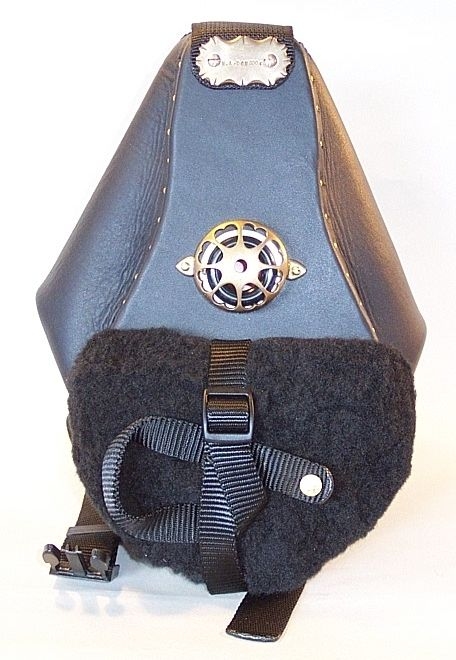
Irish uilleann bagpipe bellows These large-capacity bellows will handle any type of bagpipe. |
 |
 |
 |
 |
 |
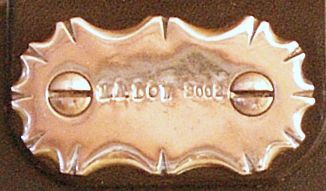 |
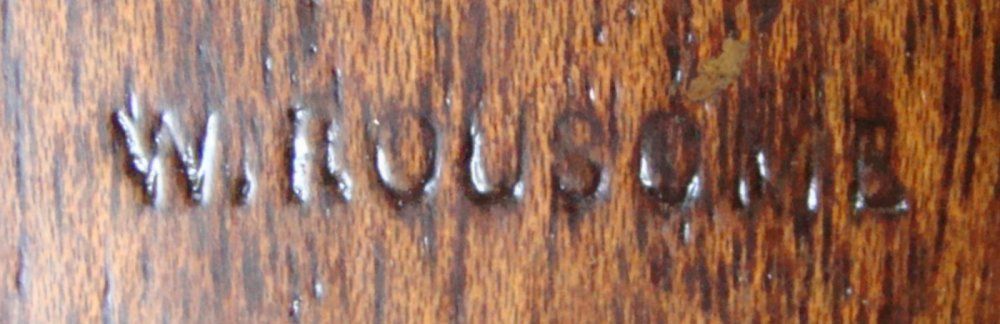
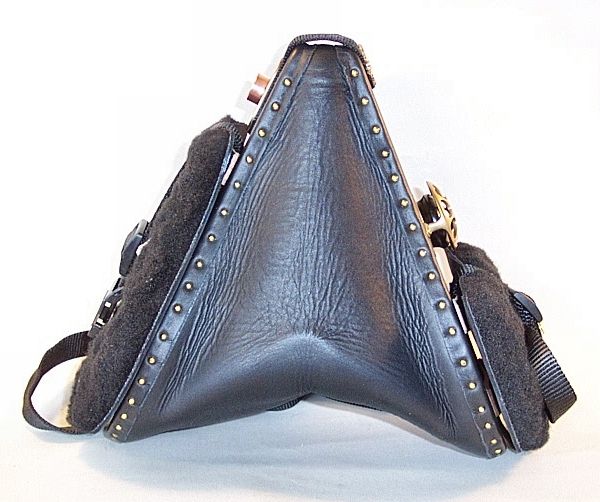
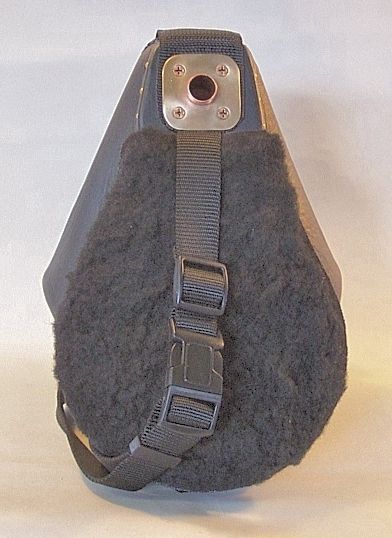
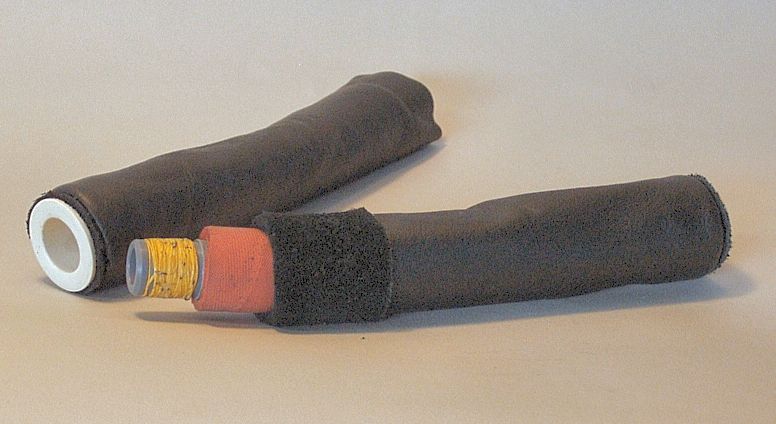
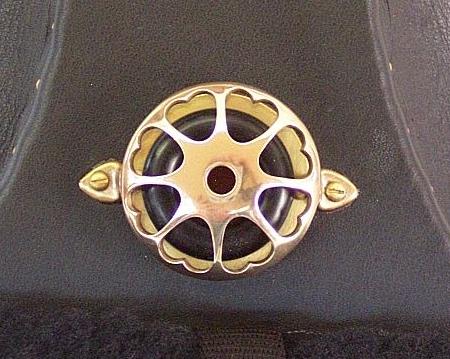
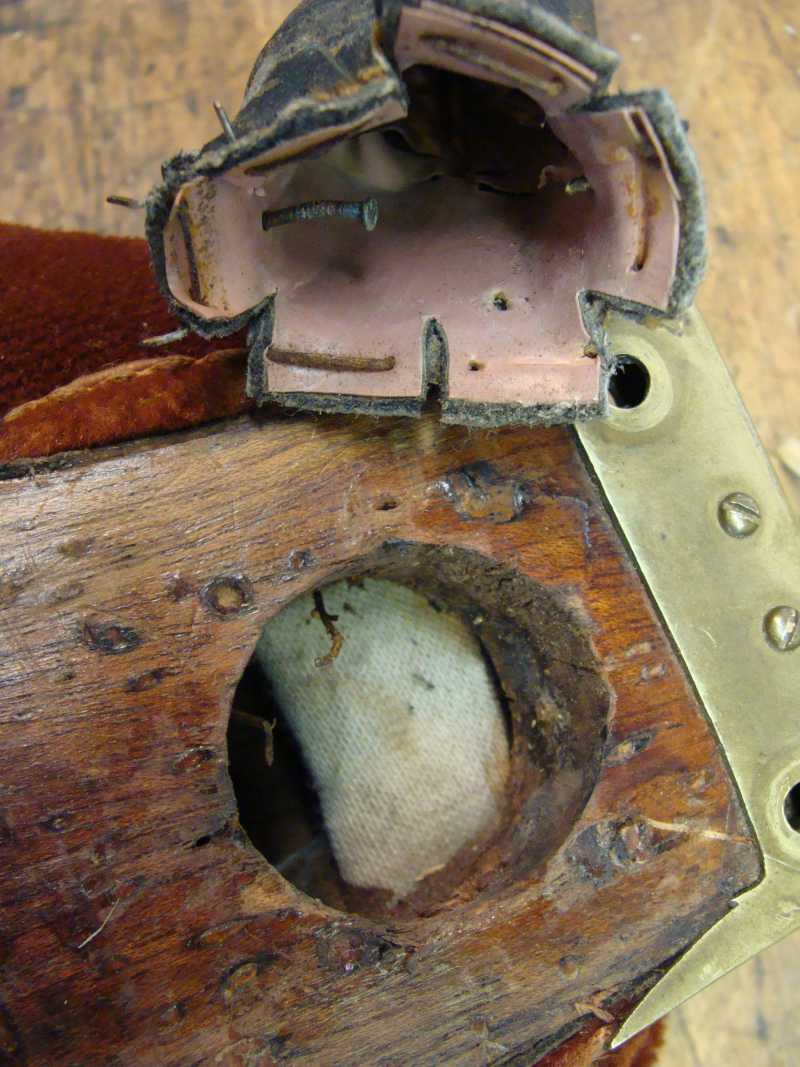
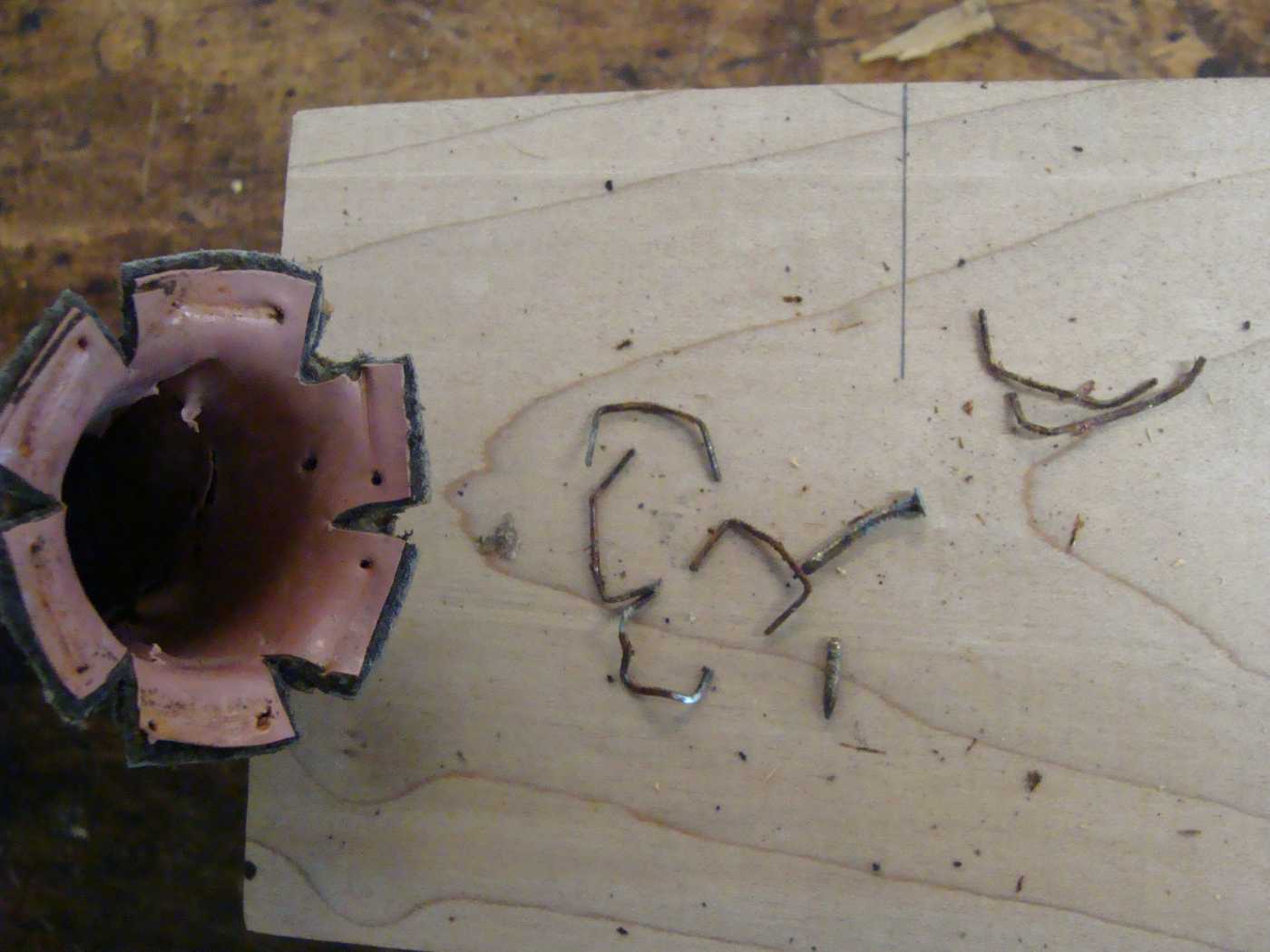
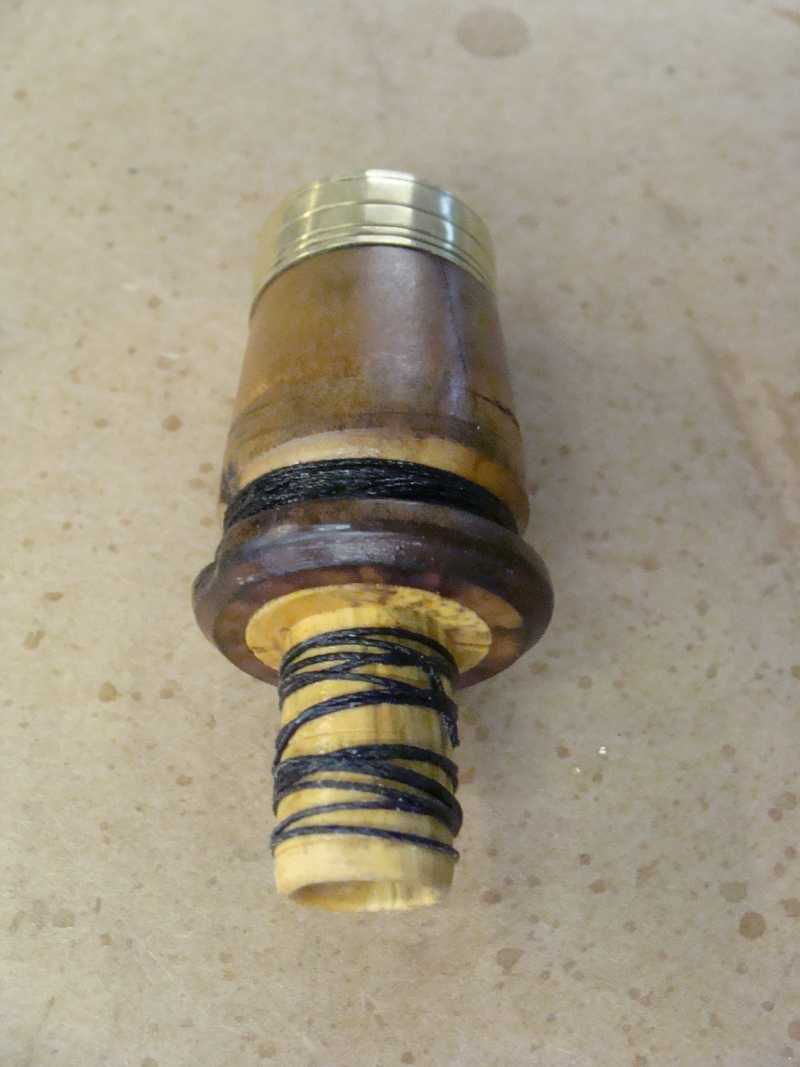
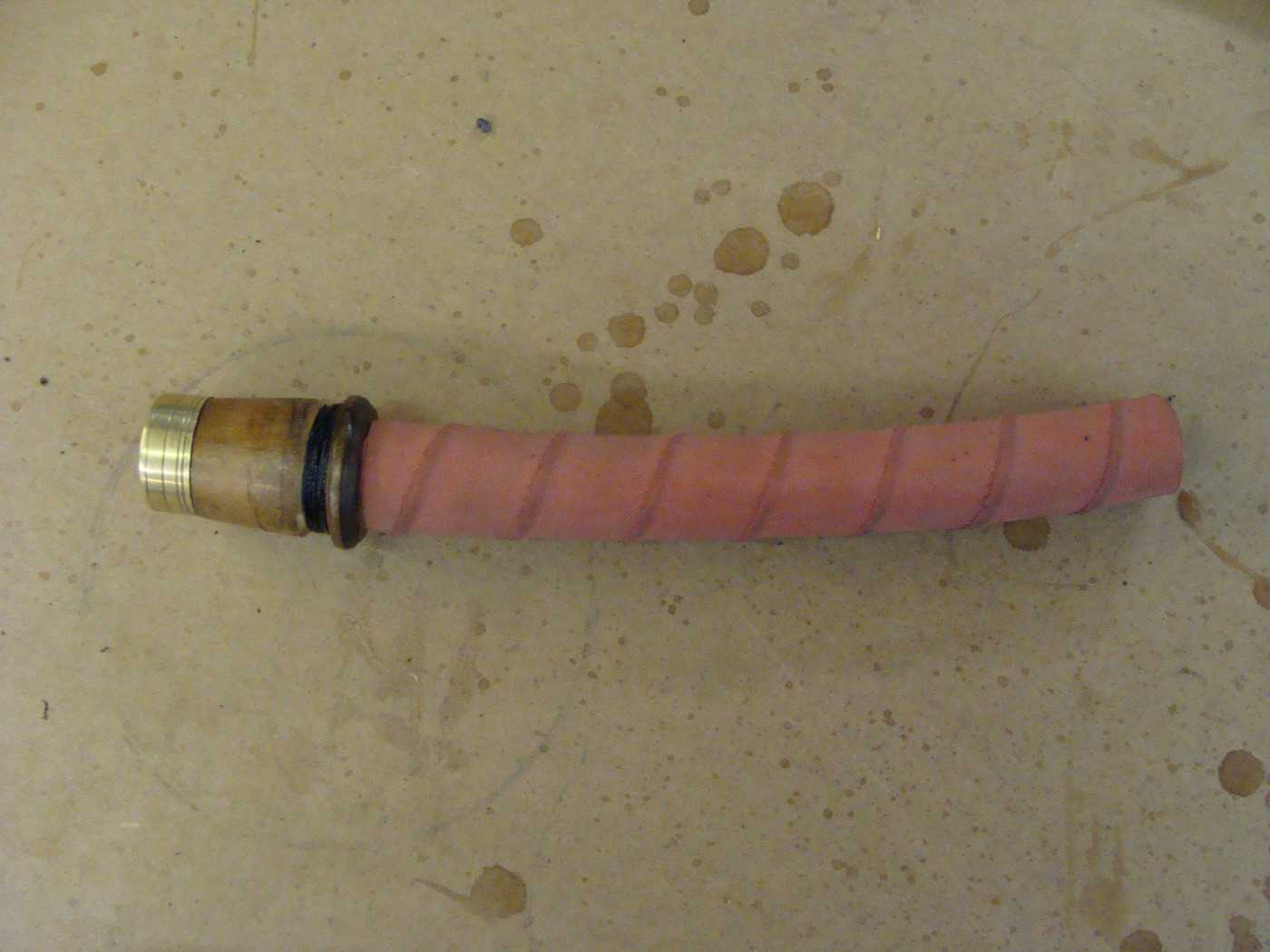
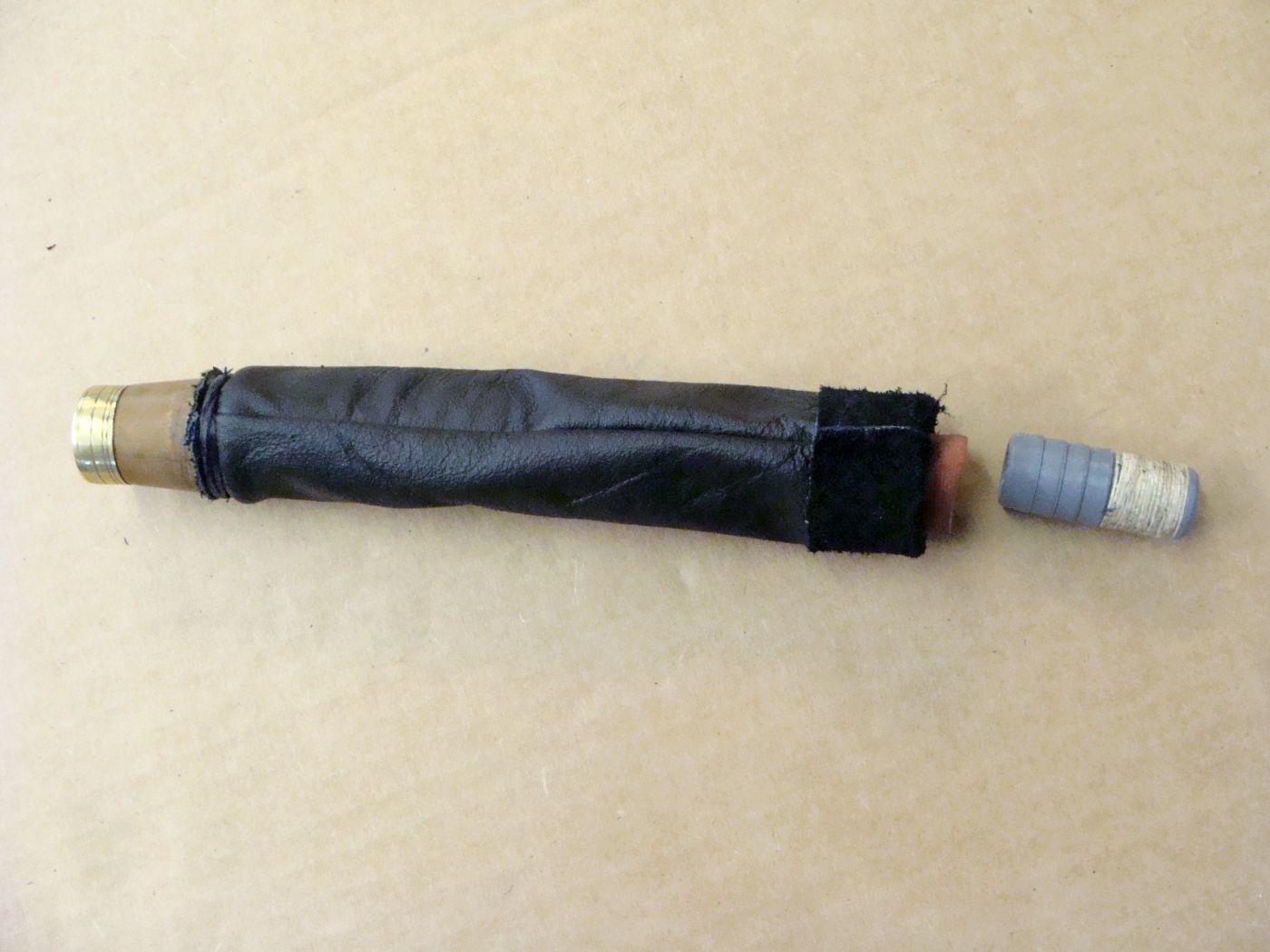
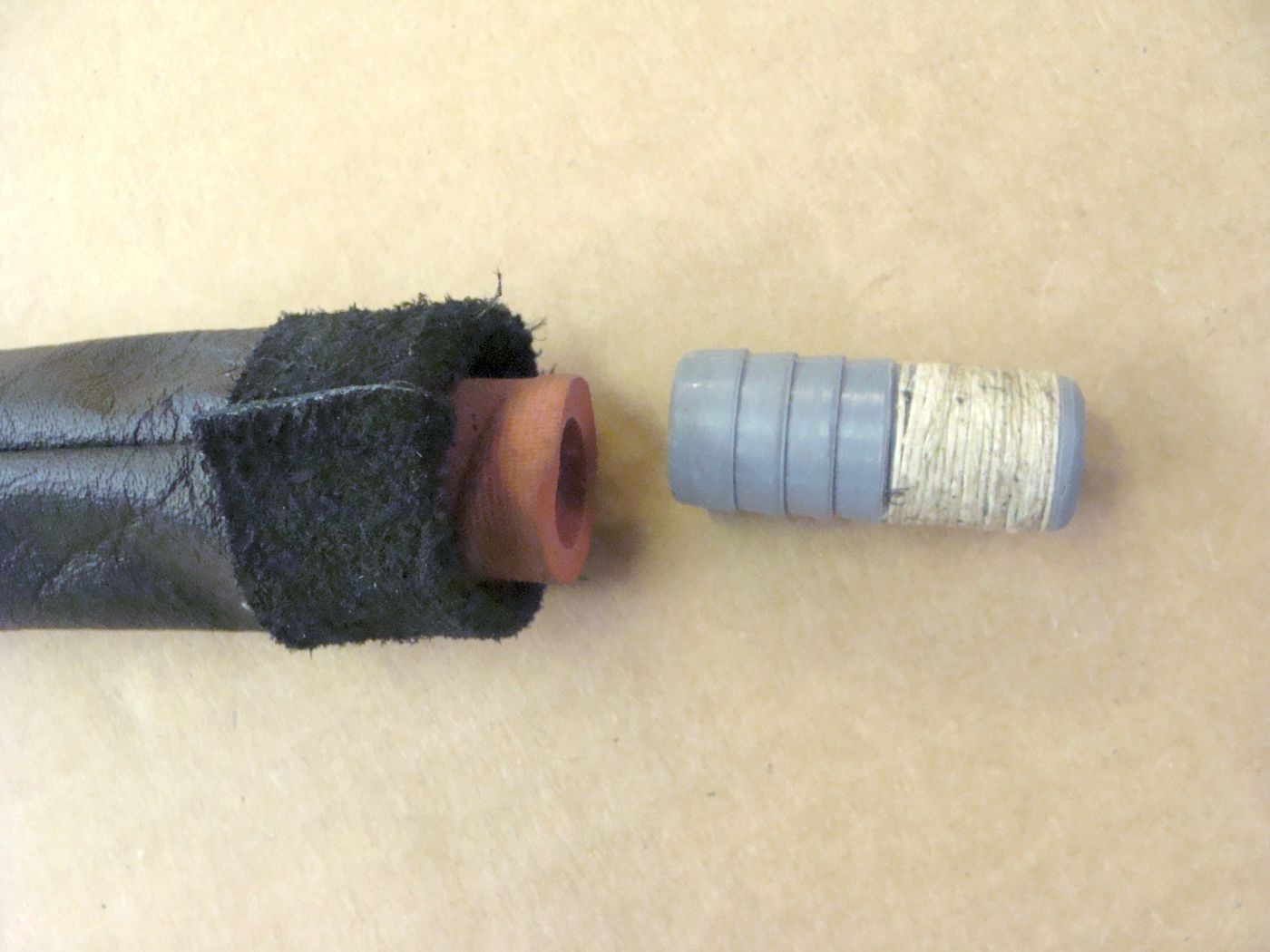
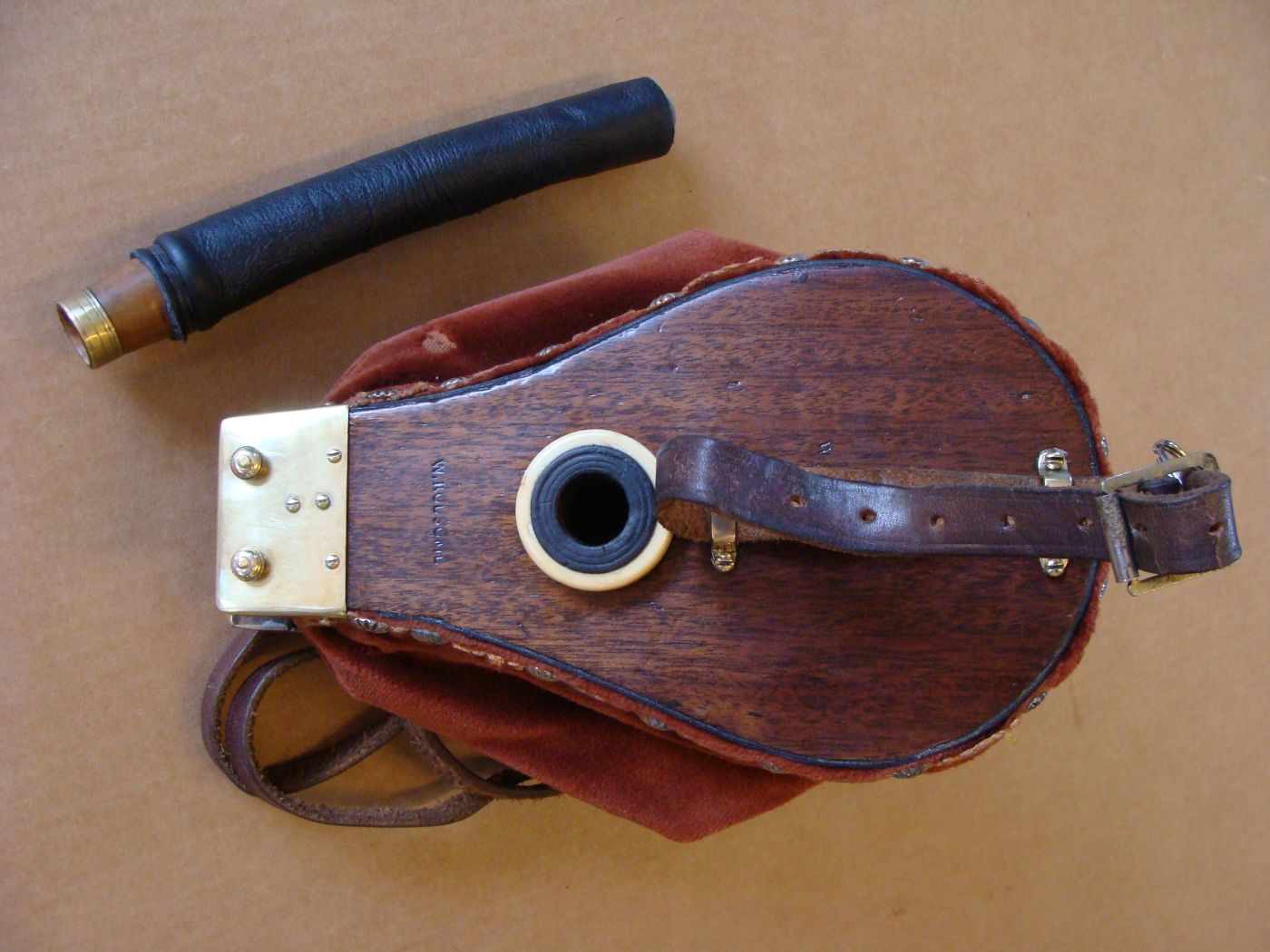
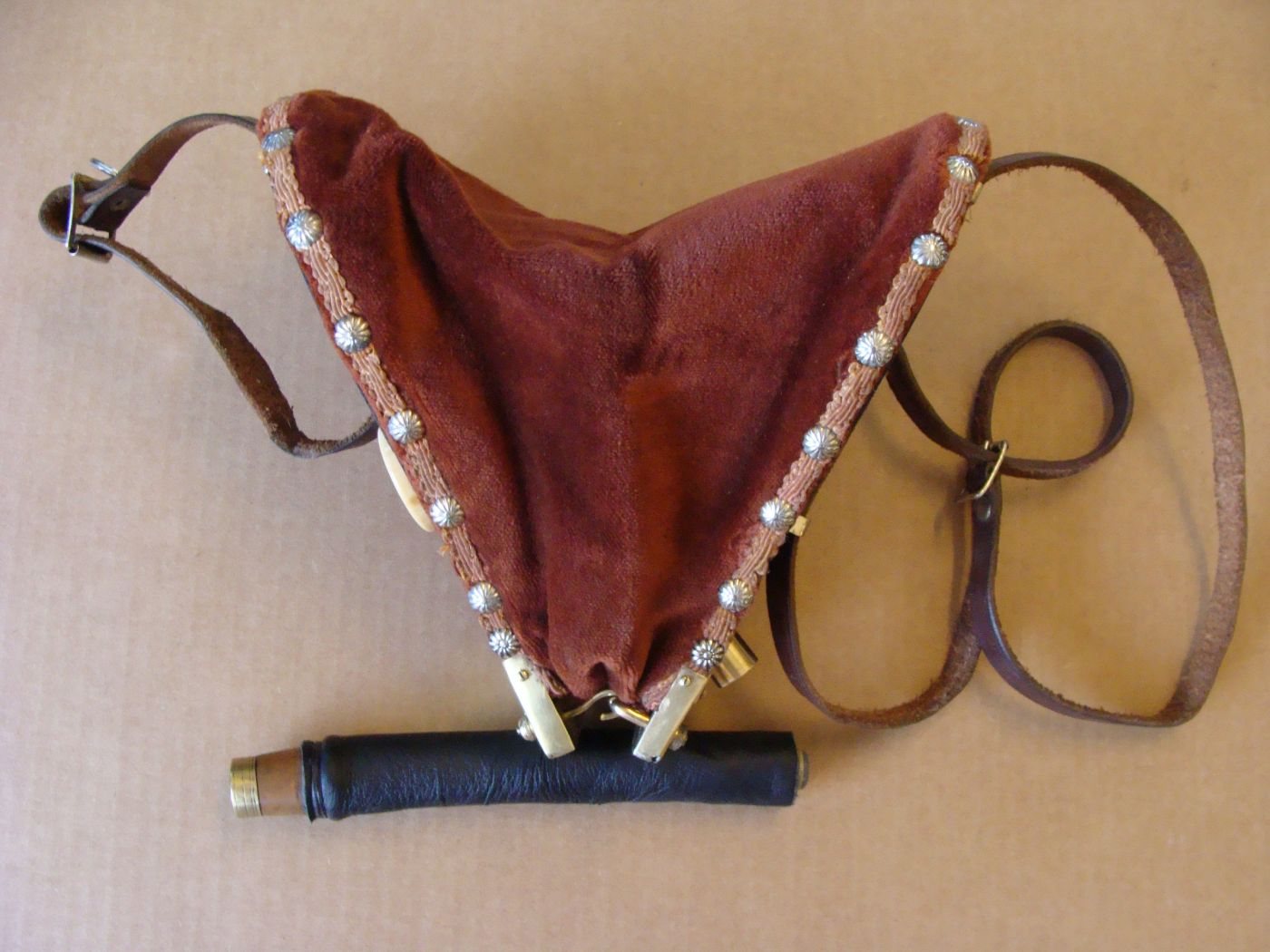
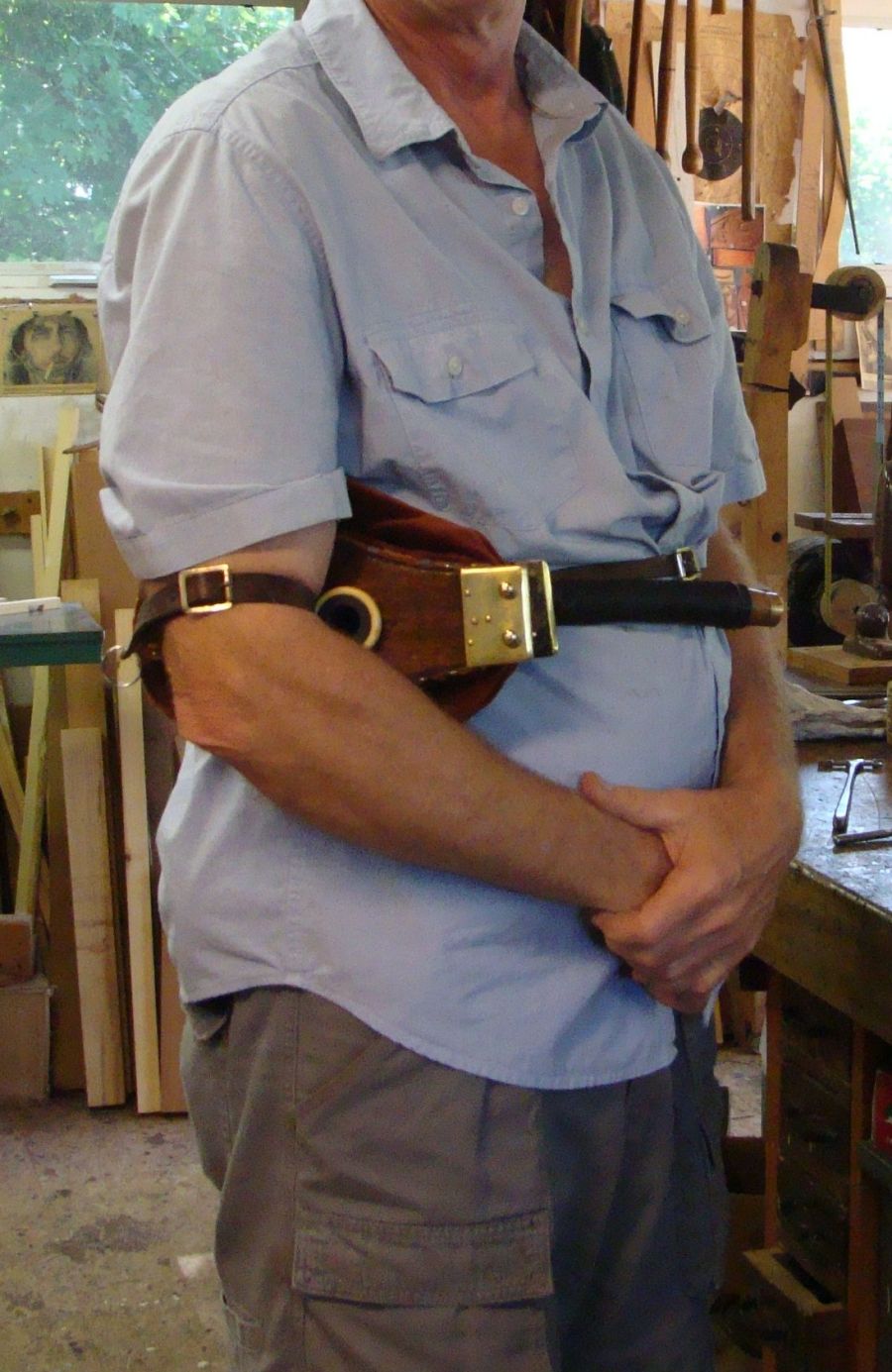
First 3 pictures show the front, side & back views of my large capacity, uilleann bagpipe bellows. The next picture depicts both ends of the flexible connecting hose. All bellows come with two of these connecting hoses. The second to the last picture is of the jeweler's bronze sleeve guard. Beneath it is the brass valve flange and black Delrin valve holder. The last picture is of the hand cast jeweler's bronze name/hinge plate. All of the features pictured above are unique to my bellows. Please see detailed description below. I make these bellows from components that are made in America. |
|
Smaller size and capacity bellows These bellows are slightly smaller in overall size and air capacity than their larger brothers. However, construction methods, materials and quality are exactly the same. They are for you uilleann pipers who prefer a smaller size bellows, and are the best bellows on the market for both Scottish and Northumbrian smallpipes. |
|
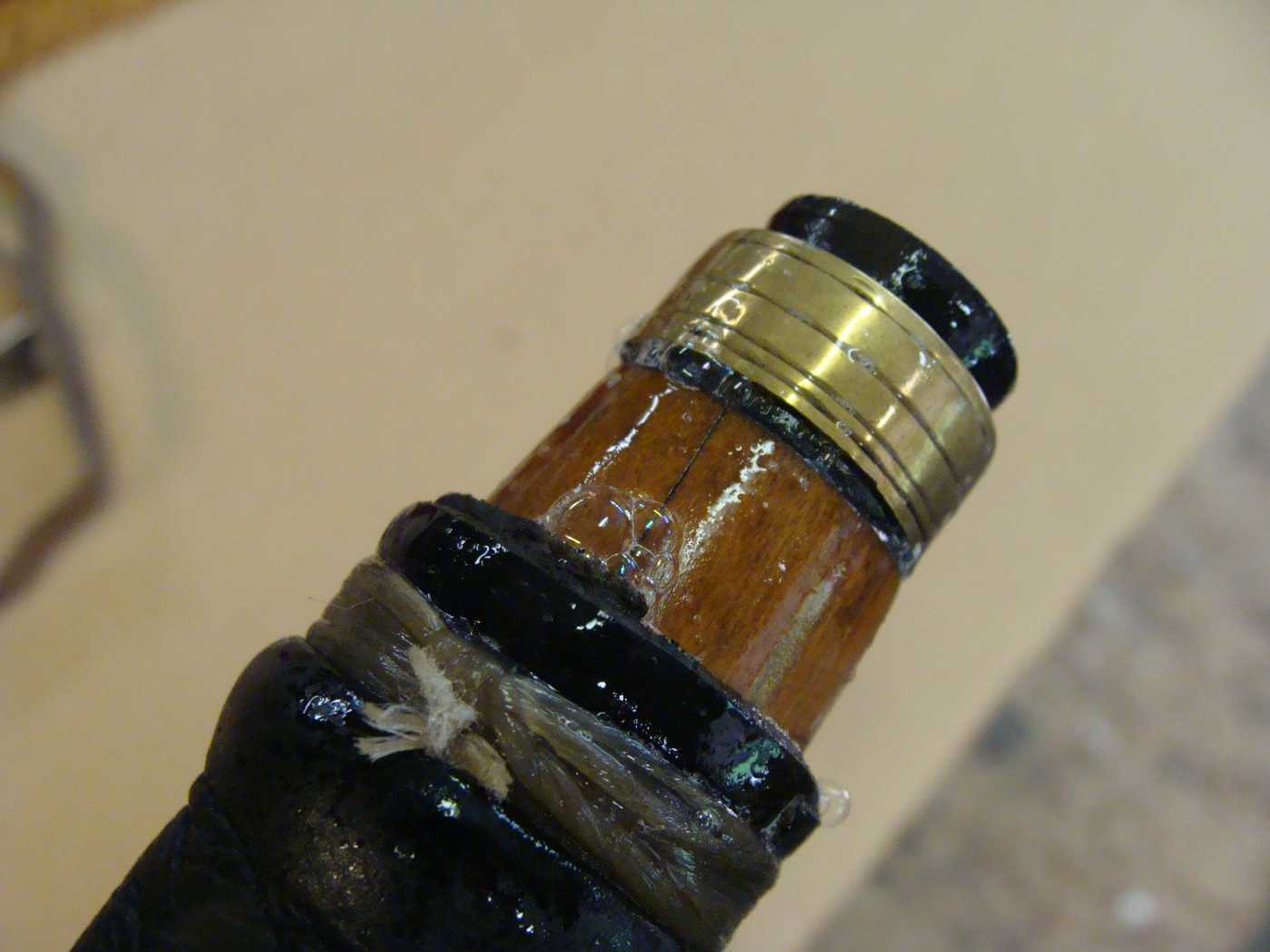
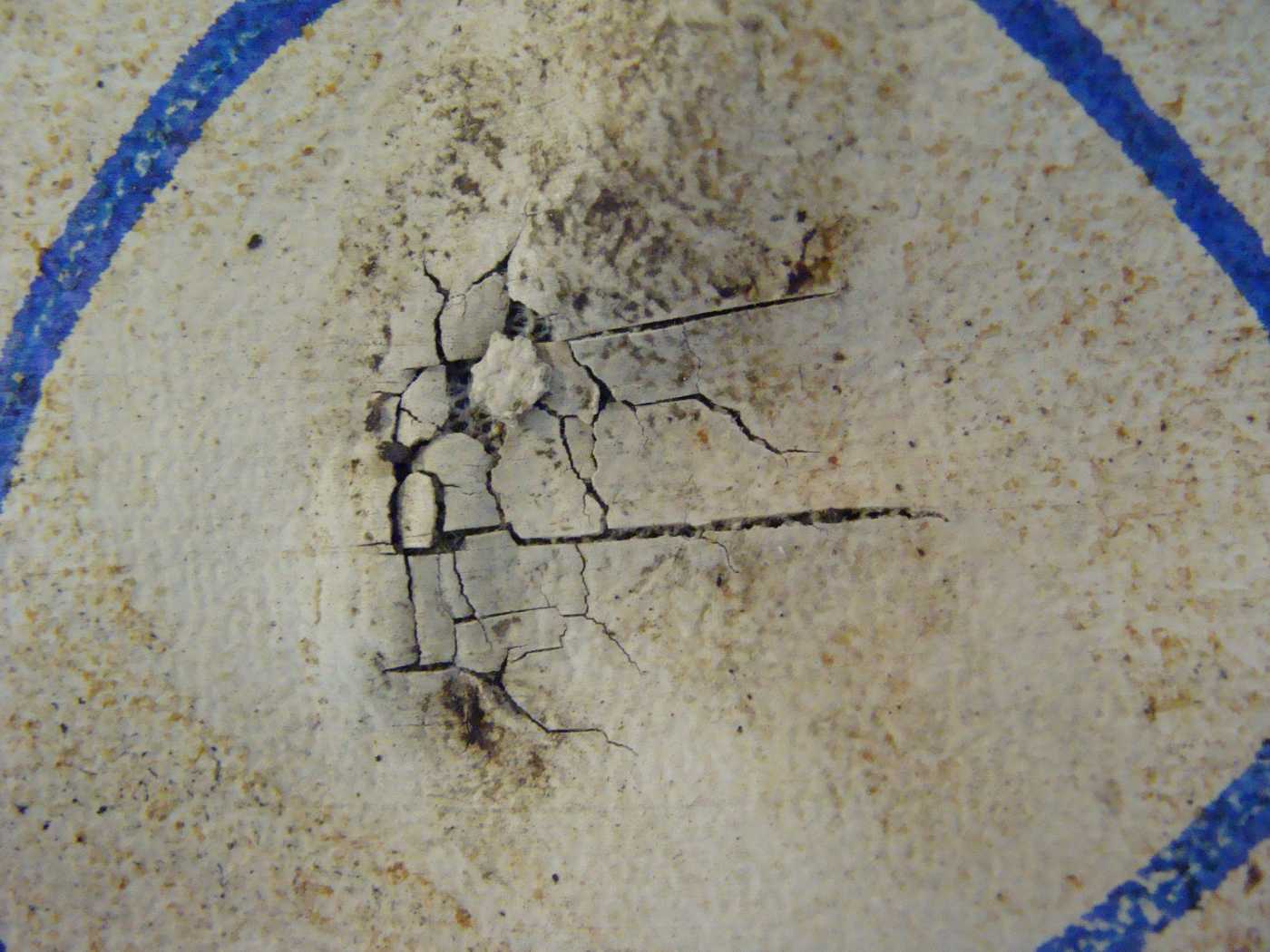
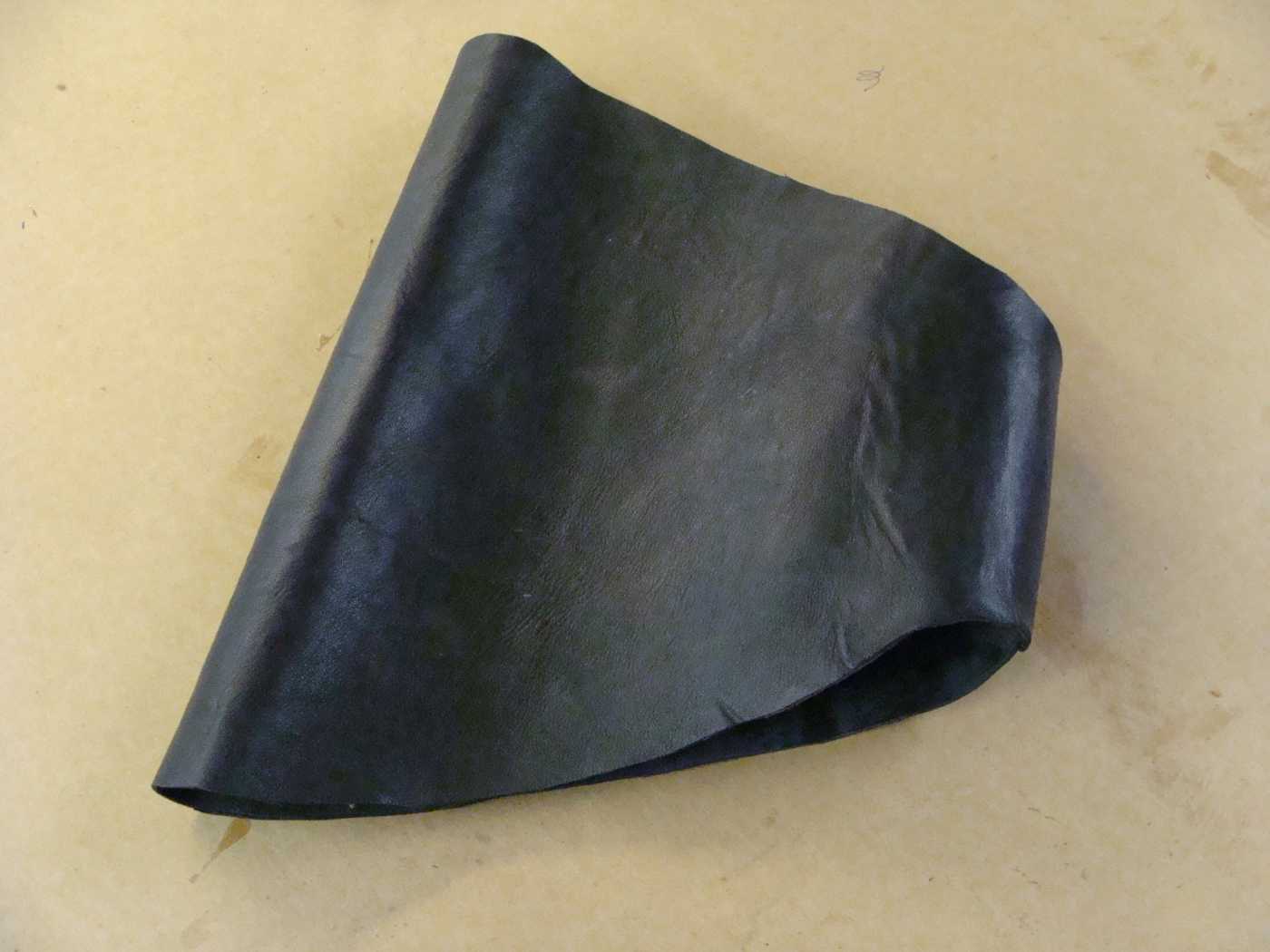
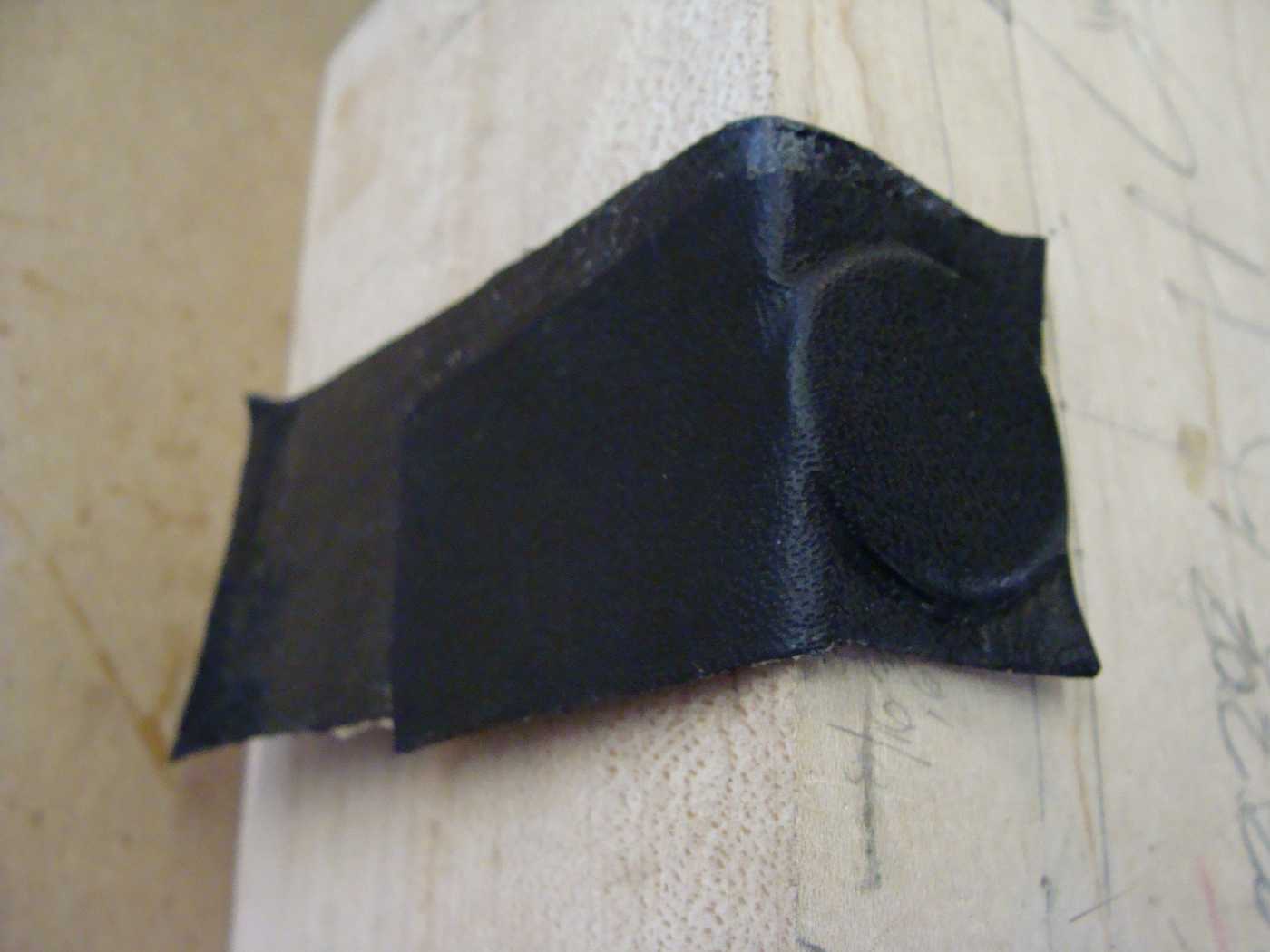
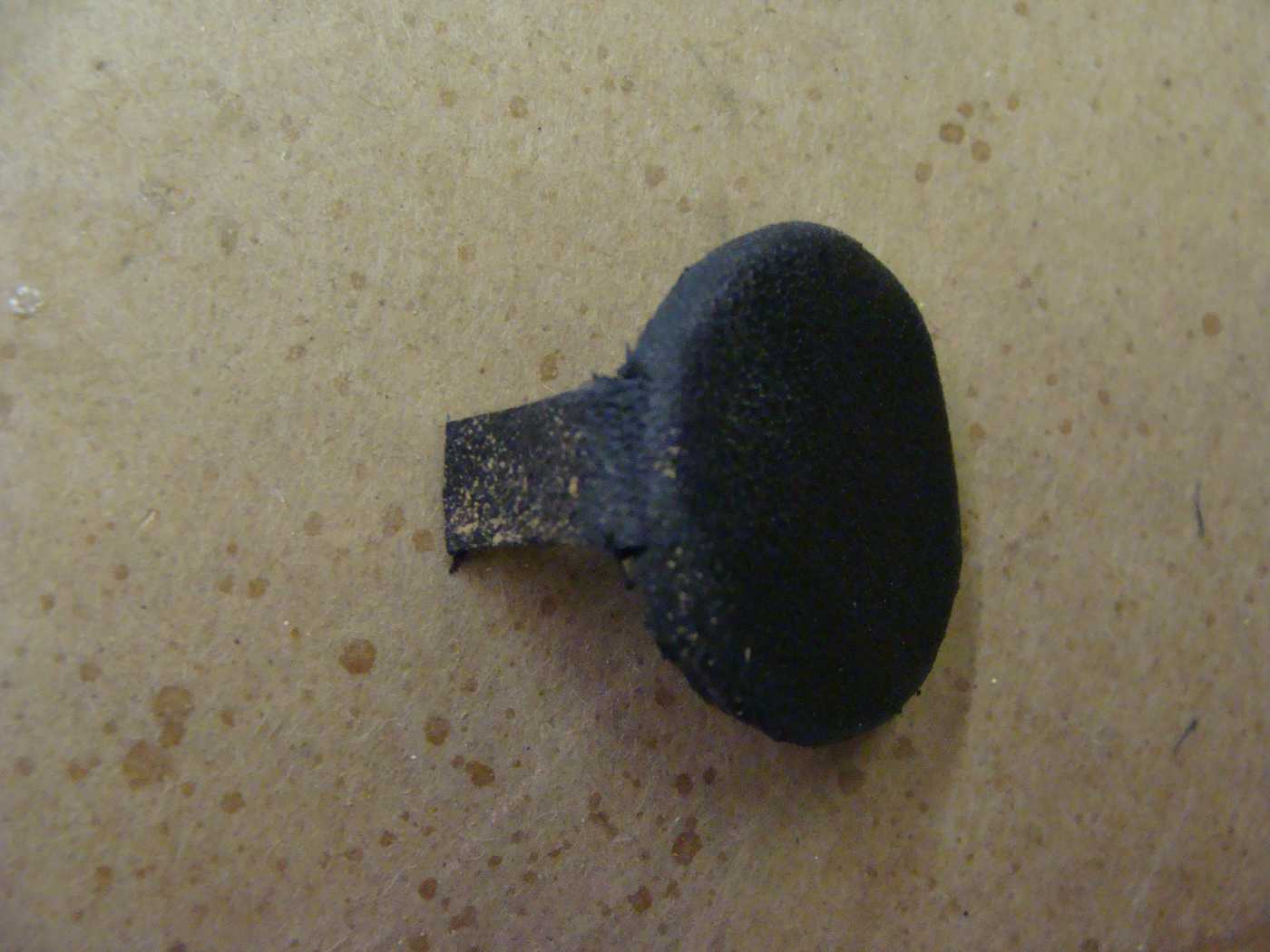
Bellows construction and material. Pads, straps & buckles The pads are made from a black, woven man made fleece that is primarily used for saddle and harness padding applications. It is an exceptionally durable material. The elbow pad has three separate parts: fleece on the front, an inner cushion and a 4 oz leather back. The body pad is a two part construction with fleece on the body side backed with 4 oz leather. These pads keep your hip, rib and elbow bones protected from the hard wooden clappers. They are soft but very strong and durable and will soon conform to your body's shape. Pads can be vacuumed and fluffed up with a stiff wire brush after extended use and they wear forever. The 3/4" wide arm strap, 1" wide body belt and 2" wide hinge are made out of soft, exceptionally strong nylon webbing that is very nearly indestructible. It never stains shirts and is washable. All buckles are nylon, light weight and strong. Like the fleece and belting, they also come out of the horse harness industry. Valve assembly The valve assembly has three principal components and is designed to be air tight and maintenance free. The valve flap is durable silicone rubber and attached to the black Delrin holder with two small brass escutcheon pins. The valve/clapper connection is made through a two piece, hand made brass flange. The cylindrical part of the flange extends down into the clapper's valve hole and the flat part of the flange extends out on the face of the clapper. Softened beeswax is used under the flat and cylindrical parts of the flange as bedding to assures a fit that is not affected by the wooden clapper's slight seasonal movement. This arrangement makes for a valve system free of air leaks. All wood moves and valve holes bored into wooden clappers will always become somewhat oblong over time. The same thing happens with wooden valve holders and that means sooner or later you have a poor valve holder to hole fit and air leaks. My custom made brass flange always stays uniformly round and it's inner sealing surface smooth. The valve flap holder is made from bullet proof Delrin and it's dimensions never change so the components never get a chance to leak. Gusset and glue Two coats of Barge brand contact cement coat each surface that will be glued to another and it provides a flexible, airtight and nearly indestructible barrier. I have never had a gusset of this type leak and it never needs seasoning. The leather gusset is two layers thick. The inside layer is sturdy 4oz. airtight leather that is glued to itself at the narrow hinge end with a 2 1/4" long overlap. The outer layer of 1 1/2 oz. black, lightweight garment leather is then glued over the inner gusset - rough side to rough side so its smooth side faces out. This is the part of the gusset you see. The garment leather ends also meet at the narrow hinge part of the assembly and are glued in an overlapping fashion and staggered with the inner gusset overlap. When finished, there is a total of nearly 7" of glued, staggered overlapping leather at the hinge end of this gusset! No leaks there are possible. The assembled gusset is pneumatically stapled to the edges of both clappers. Another piece of thin garment leather is glued onto each clapper face and down over the stapled edge of the gusset. Brass escutcheon pins are driven into slightly smaller pilot holes that are pre-drilled between the closely spaced gusset staples. Wood The clappers are made from carefully chosen, clear, straight-grain, defect-free, flat-sawn domestic cherry. I use this wood for its density, stability and mechanical holding properties. I spend a lot of time and effort making sure that the wood's grain runs horizontally, or parallel with the clapper's width to insure clapper strength. Hose The black leather cover air hose is detachable for easy storage and its length is adjustable to suit your body type. It is made out of 4 mm wall, red latex rubber and is flexible enough to easily conform to the shape of your body and will not kink. A plastic PVC fitting (female) has been forced into one end of the hose and permanently glued to it. On the other end is a male PVC fitting with its outside end wound with waxed hemp for insertion into the copper pipe silver soldered into the cast jeweler's bronze exit pipe plate. It is adjustable for length using by forcing off the gray end with your thumbs and cutting the hose using sharp scissors. Remember, winter is coming so measure the length while-wearing winter clothes. Call if you have questions. Sleeve guard The round, hand cast jeweler's bronze sleeve guard was designed by me, copyrighted in 1991 and is unique to these bellows. It has a heart motif around the outside edge, and it will keep your shirt sleeve from being sucked into and clogging the valve hole while playing. The fancy hinge name/date plate is also my design and cast out of jeweler's bronze as is the back exit pipe plate. These are hand cast in Maine using the lost wax method. Why they are important Bellows are at least one half of any set of bellows driven-bagpipe. They will work without the pipes but the pipes are useless without them. My bellows will power your bagpipes with more comfort and efficiency than the bellows that you now own. A tendency to over-blow will be noticed at first, but this will soon disappear as you get use to the increased volume and efficiency. Your right shoulder will be working less and thus be less prone to fatigue and the shoulder ailments we all suffer as age catches up with us. After a short time, you should be playing in a much more relaxed fashion and having more fun with the music. I guarantee all of my work against failure due to workmanship and material. This guarantee extends to the original owner only and has no time limit. Naturally this excludes acts of God (kids, dogs, hurricanes & etc.), extremes in temperature and humidity and acts of craziness or negligence by the owner. This includes maintenance on or adjustments to these bellows, which are not specifically, recommend by the maker. Repairs or modifications done to these bellows by persons other than myself or those appointed by me will void any expressed or implied guarantee. Never season the inside of these bellows with anything! I consider each bellows I make a once in a lifetime purchase. Questions? If you have any questions concerning any product I have make, send an email to the address found on the bottom of the Home page and I will get back to you. Overall dimensions are: 11" long X 6 1/2" wide X about 5" thick when new. |
|
All prices are subject to change without notice. Please contact me for availability. I do try to keep a number of bellows in stock at all times. Uilleann or
Scottish smallpipe bellows sold in my shop - $640.00 Shipping on
all bellows within continental
USA .
$670.00 Domestic shipping via Priority Mail takes about 3 business days. An adult signature will be required. Insurance and delivery confirmation included in the price. International
bellows sales using PayPal
only. $700.00 Architectural
Woodcarving |
|
|
 |
 |
 |
|
|
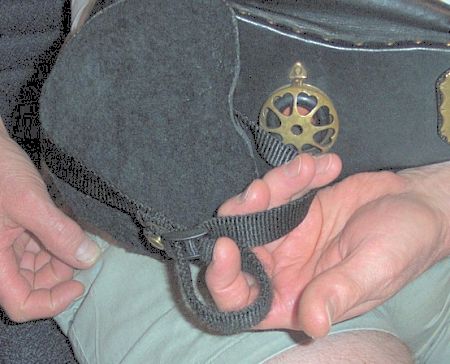
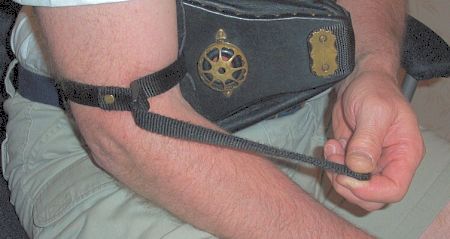
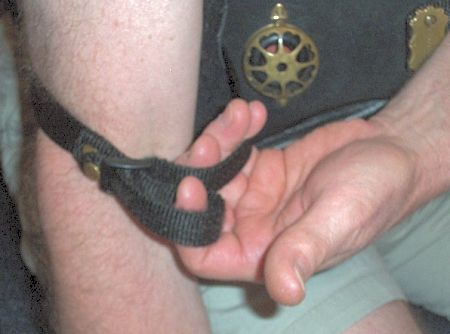
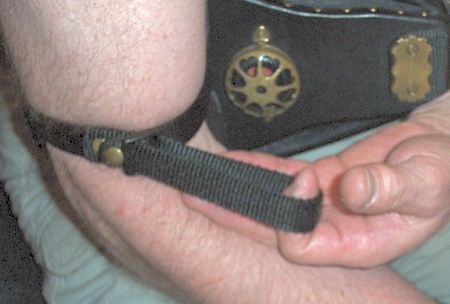
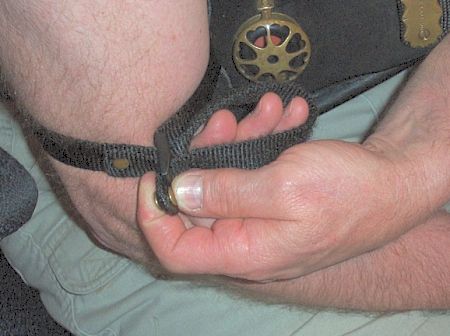
1 - Always start with two loops - small, buckle loop and larger, pumping arm loop. 2 - Pumping arm through the large loop. 3 - Pull the small, buckle loop to make the large loop snug. 4 - Keeping big loop snug, pinch brass keeper on strap end. 5 - Pull brass keeper toward hinge end of bellows. The buckle rotates to keep nylon strap snug against pumping arm while large loop slack is taken up. |
|
|
 |
 |
|
|
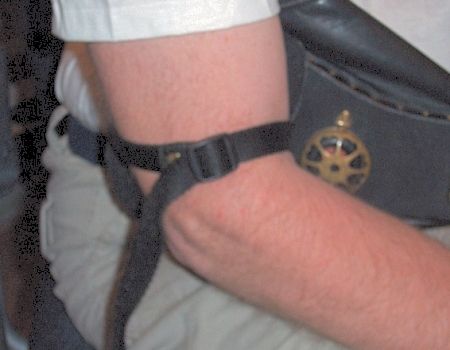
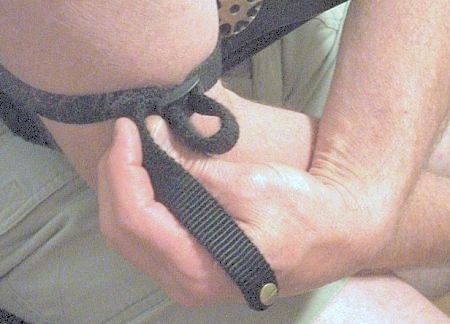
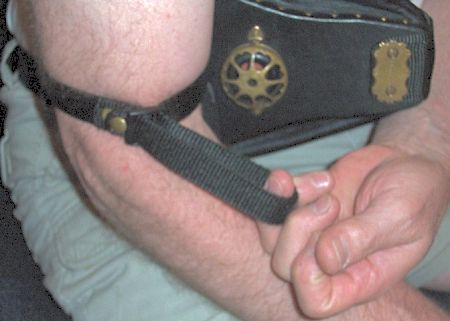
6 - Arm strap as snug as you want against pumping arm. 7 - Done playing? Pinch loose end of nylon strap and push back making small loop in center of buckle. 8 - Finger in small, buckle loop and pull out to give some slack. 9 - Pull large, arm loop and extract arm leaving two loops - small buckle loop and larger arm loop. See #1 above. 10 - 2017 - Following a great tip from a piper who purchased my bellows and slightly modified them, I have added a "D" ring to the small loop. So, for newer bellows, #7 should read: "Done playing? Pull the "D" ring in the small loop and trapped by the center of the buckle and pull." |
|
" I needed a large-capacity bellows that would be a comfortable, dependable, efficient workhorse that would stand up to excessive wear and tear. The bellows Mike made for me is an outstanding piece of craftsmanship which is all of these things plus some. You simply cannot do better than a Mike Dow bellows." Jerry O'Sullivan - 2000 * "I have tried the bellows and am very pleased with them. They really are excellent - what a difference to the other set I had. Very nice and responsive. Thanks again." Peter L. - 2001 * "I bought a set of smallpipe bellows from you last year, and was and remain absolutely delighted with
their performance! Seriously: your bellows has brought lovely light to the dark day of my past
bellows experience! It's incredibly comfortable to hold and play, and it's beautiful to look at, to boot.
Thanks again." Thomas M. - 2001 * "I am delighted! I received your beautifully crafted bellows
yesterday Edmund Toney - 2001 * I am pleased to report that after 4 years your bellows are still performing wonderfully. I receive many inquiries about them and always direct the people your way. Thank you for your excellent craftsmanship. Edmund Toney - 2004 * "I haven't yet had a chance to thank you for the bellows. Nice work! Excellent! I can't describe to you how much easier it is to play the border pipes, now that I have an appropriately- sized set of bellows. I bought one of Michael Dow's bellows about 2 weeks ago, the big (uilleann) size. Its craftsmanship is excellent:
from the quality of the leather itself, to the cheeks, to the sheepskin pads, to the nice bronze guard for the inlet!
Wonderful! And, who knows why I like it so much, the blowpipe connector is a nice solid copper. These are
WORKHORSE bellows, and the craftsmanship alone is worth the admission price. Stuart Hall - 2001 * "I received the (uilleann) bellows yesterday. They are great! I just need the rest of my set going as well as these bellows. They are the best made bellows I have played. I'm very happy with them. If you ever start making sets of uilleann pipes, put my name down for a set. Regards," Emmett Gill * "The pipes have arrived in great condition. They are beautiful and the tone is great. Your workmanship will be played and
enjoyed for years to come. Harry Nichols - 2001 * "My bellows arrived and we're having a great time getting to know each other! First of all, it's beautiful - a real work of art! I love the padding under the arm strap and the sheepskin on the underside! So as soon as I get the pressure difference resolved and finish adjusting my chanter reed (the drone reeds are doing very well), we should make lovely music together. Thanks so much for getting it to me so quickly!" Ann M. Watson, Chairman * "Thanks for your greeting. I am using the bellows every day and they are great. I use them for my border pipes, which were difficult to play before, at least for me, even after I sealed the leak in the maker's bellows. I am also starting to learn Us. For my Day penny chanter, your bellows is so efficient that you virtually never pump it completely. Thanks, Michael."
* "Michael Dow's bellows are supreme! "I'm quite delighted with Michael Dow's bellows. They are better than one can imagine in many ways. They are a work of art...expertly crafted with great attention to detail and are very aesthetically pleasing. They are also quite comfortable to use. The bellows are the most airtight I've ever played. As a result of this and their size, it is quite easy to keep up with the airflow demands of the full set of pipes. I highly recommend the purchase and find them to be well worth the investment. Best part of it is that Michael is a true gentleman to do business with." * "When my fingers finally thawed (from moving 2002/3 snow) I strapped
them on and they are for lack of a better word, luscious. They make a
wonderful connection for a set of pipes which have soul and on into the
player. Cheers for coming up with a way to make a symbiotic relationship
and connection between piper and pipes. Got them fitted to both the uilleann
and the Sloan smalls I have. Thank you. It's helping me get
into the attitude of wanting to pick up my pipes to play instead of
cranking on rigid and or leaking bellows. Cheers mate!" Chris Pinchbeck Rockland, Maine - 2003 * "The bellows have arrived and they are great! What a difference they make, they can really power
these pipes and make it much more relaxing to pipe
the tunes. I am very pleased with them and thank you much. I don't
understand why I didn't do this earlier. Thanks again" Ed Harrison, Tailors, South Carolina - 2003 * "Finally got my hands on the things yesterday - very happy indeed.
They make a completely different instrument of the pipes. Make it much easier to bash regulators too, so I can make any passing
guitar/bouzouki/mandolin player's life completely miserable. The long term health benefits will be good too - as well as saving my back, the
duty means I won't be drinking for the rest of the month ;) Cheers Mike" Cormac Cannon Limerick, Ireland - 2003 *
"About 4 or 5 years ago I was taking piping lessons from Al Purcell (R.I.P.), and I ordered one of your uilleann bellows after seeing the one
he had gotten from you. Shortly thereafter, I went through a divorce and
had to sell my set of uilleann pipes. Unfortunately, the bellows went with
the set I sold. I am now able to get back into piping somewhat, and I
remembered that your bellows was far superior to the one I had with the
original set. Now that I can get back to the pipes I wanted the comfort
and playability of a Michael Dow bellows once again. Once someone
experiences one of your uilleann bellows, the others just don't measure
up. They sell themselves."
Greg Gunner *
" Thanks for the follow up! The bellows are wonderful! I can't get over how well-designed it is. It is such a pleasure and
comfortable to play!"
Dan McNamara * "I've been putting your bellows through it's paces for several weeks with mixed reviews. Good news -- smooth, powerful, no-effort pressure flowing through my chanter and drones. Bad news -- no more excuse for playing badly. Good news -- great to have the bellows in the car when I have a flat tire. A few pumps and I'm back on the road." Jim Reilly * "Hello Mike! Stefan Karat * "I got it this morning and all I can say is WOW! I don't have my border pipes yet, but it makes the Smallpipes effortless. I can already see an improvement in my playing. I have blown a lot of my money on less than useful piping gadgets over the years, but this is definitely money well spent. Thanks!" Patrick MacLeod * "Hi Michael -
Ann Wallace *
"Michael - got the bellows and they are magnificent. Like a new set of lungs!
*
"thank Michael! they really do make a huge difference!
regards" philadelphia, pa - 2004 *
"Michael,
Peter Walker, * "Like one of your other customers, I just took receipt of my second set of Dow bellows, having foolishly sold my first set off with a set of Smallpipes. Your bellows have really spoiled me. I will just never be able to go back to wee puny girlie bellows ever again!" Name Withheld (at piper's request) to Protect Commentator from Grievous Bodily Harm * "Michael- the Smallpipes bellows arrived, and the pipes were singing in
short order. Your bellows extra capacity and efficiency made playing easier immediately, and they
are beautiful to look at to boot. 2005 * "Michael, your bellows arrived yesterday. I am indeed a lucky fellow to have a wife who would buy me such a wonder gift. I can’t begin to tell you how much I enjoy them and what a difference it is to use them on my small pipe and border pipe. I have never before really enjoyed my border pipe much because it just seemed such a weak imitation of my highland pipe. I had to play such weak squeaky reeds. Your bellows are so efficient and comfortable. They now make playing my border pipe look like fun, and I now think I can set up an old set of
Laurie reel pipe to use with them too. I look forward to a long time of pleasure with my bellows pipes because of you and my wife. Your bellows are a delight to use and to look at." Ed Lindsey * "Hi Michael, Matt Willen * "Hello, Just a quick note. My name is John McCarthy. I’m the guy who, in July drove up from Boston and purchased a set of your uilleann bellows. THANK YOU!! The bellows are great and air tight! I instantly noticed the improvement over my other bellows. They make my pipes more fun to play. The 2 day process of ordering and then having them available for pick-up wasn’t too shabby either! Thanks again. All the best, " 2006 * "Yes, received the blowpipe no problem and
everything is working BEAUTIFULLY - good grief, your bellows is the
greatest! My playing is infinitely better because of it.
Thank you so much for all your help as well! I'll
definitely try and get a recording out to you sometime - currently
working on a couple of projects. Talk
to you soon! Ben Jaber
* "Bellows arrived safe and sound yesterday evening, no customs interception! They work beautifully. I will probably shorten the blowpipe by about an inch. Other than that, I'm delighted. If anyone over here is looking for good bellows, I will send them your way." David Power *
"When I first got your bellows, I noticed they looked much nicer than
my other bellows. Workmanship is very functional and clean.
When I started to pump air, I quickly found out I hardly needed to
pump to fill the bag. I soon noticed I was not even paying attention
to pumping the bellows, as the bag was full with much less work than
with my old bellows. I have been able to pay more attention to
my chanter work than worrying about the bag and bellows.
Peter Allen * Arrived today (Weds.) Perfect! My thanks. as always.(Love your work) Seamus
|
|
Alternate bellows playing position
|
| Once upon a time,
Northumbrian piper Dick Hensold had a very bad bellows shoulder and
being a person of great determination and creativity, he found a work-around. He sat
on a stool, kicked off both shoes and used his feet to push a
bellows that was made to inflate a rubber raft. A long hose ran
from the bellows to the blowpipe and his music sounded great, as
usual. This happened beck when the Pipers' Gathering was in the North
Hero Village Hall.
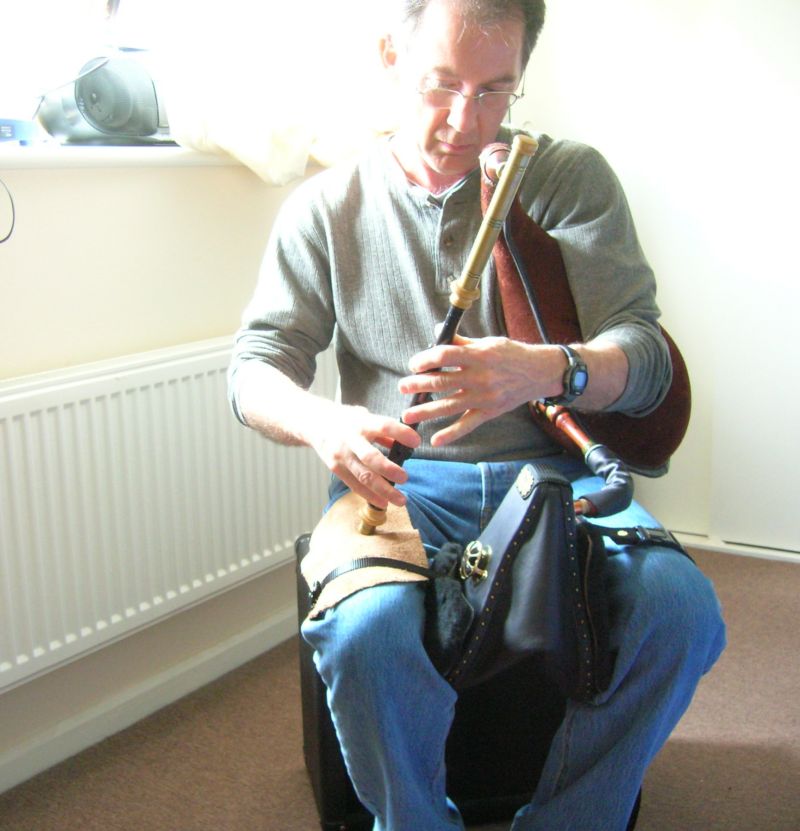
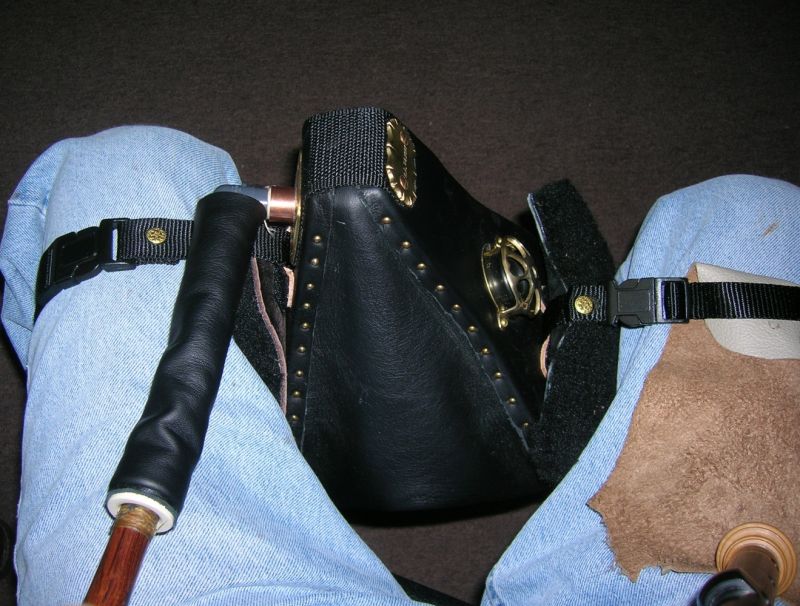
I recently sold a bellows to a piper in England and he sent me the two pictures with the explanation below. By the time he gets his half set his thigh muscles should be ready! "The reason I did this was my shoulder was not feeling to good from arthritis or bursitis. Hell, it just hurt. It rains here a lot and that does not help. I was looking for ways to make things more comfortable and started experimenting with different positions of the bags and bellows. I even went from a lefty to a righty for holding the chanter. When I put the bellows between the knees, it took all the stress off my arms. I found I was able to concentrate more on the fingering than keeping the bag full. Keeping the bag full with the legs seemed more of a natural motion than with the arm. My arm no longer ached after a practicing." |
 |
 |
|
* "Hello Michael, Colin Everett * "Dear Michael, The bellows arrived and I am quite pleased with them. They are better than any other bellows I've ever used and my playing has improved immediately, especially working between the two octaves. The hose is shorter than the bellows I had been using, so it may take a while to adjust to the new length (I suppose I could replace the hose with a longer one?). In any event, thank you for an excellent product and courteous, prompt service." Dan Humphries "Hi Michael, And happy new year. Hope you and your family had a great holidays. Just wanted to let you know I love the new bellows. I had my first proper go on them yesterday, first at home and then out at a session. Once I got used to the significantly increased airflow I was away and flying. Quite a remarkable difference, especially noticeable when playing the full set with drones and regs all going. Easy action. Comfortable. Beautiful to look at. I couldn't be more pleased with them. Thanks so much." |
|
mike, well buddy i knew it would be good, but i am blown
away i played for a couple hours last night and the
ease and grace of your bellows made me smile my drones sound
so different no buzzy bees with bad wing beats just this
beautiful even hum man i am a happy dude i am playing
at a gathering this weekend and will spread the word i hope
to get you a few more orders thank you again i
love the look and the feel it is nice to see real craftsmanship
here's to you mike thanks you rock" John Marrs * |
|
"Hi Mr. Dow, Arthur Cholakis * |
|
"Michael, I received the bellows on Saturday. They are a tremendous improvement over the bellows that came with the pipes. The larger volume makes it much more comfortable to play. Thank you for the quick shipping." Paul Harren * |
|
"I just got the bellows. Beautiful work! I just played my pipes, and I think the bellows will work wonderfully and painlessly. The new valve is a "miracle". I have always noticed a little leak, but couldn't pinpoint it. Problem solved. The hose length is perfect. I'm at maximum winter-weight and it fits just fine." Charles E. Heckler Rochester, NY 20108 * |
|
"Hi Michael
Brendan Ring * |
|
Michael,
I got the bellows today, Tuesday, October 26 (2010). I am very pleased, as you knew I would be. I still have a problem with that little bony nub on the inside of my elbow. I'm putting up firewood and can't give it any rest or time to heal. Plus, it constantly gets bumped on the wood splitter. I think that starting off with
the elbow not all frigged up, I'd have no problem. Still, your
padding makes a vast difference...I could barely play my old bellows
at all, it hurt so much. Again, your bellows are superb.
They make it so much easier for me to play.
Thanks again for all your good efforts and fine work. Tom Seymour * |
| October 28, 2010 Michael, By gorry, I don't remember ever dealing with anyone so helpful and agreeable. I agree to be your "pad test pilot." I'll surely let you know how the pad works and I look forward to using it. Thank you, Michael. Tom Seymour * |
|
November 8, 2010 Well, I wrote and sent in a piece for a magazine...a day's work for me. And then I used the balance of the afternoon for playing pipes. I did a good 3 hours. When I began, the nub wasn't too bad, but still sore to the touch. Now, after 3 hours, it is a little more sore. So here's my take on it. I can live with the pad the way it is...it doesn't aggravate the condition by an awful lot, just a little. I suspect that a greater distance from the bottom would help, however. So that's my report to
you...from your official pad-test pilot. Tom Seymour * |
|
November 13, 2010 I got the new pad Friday
afternoon (November 12) and played for over an hour that evening. My
elbow was very sore to begin, too, since I had been out with a
scythe (no choice there) on some tall grass and that aggravated heck
out of it. I wound up my session without any additional pain and
didn't feel any while playing. In fact, I got most of "The
Haunted House" down, a new tune for me. Thank you for letting me be your tester for this. Tom Seymour * |
|
November 14, 2010 I played for a good stretch
today, too, and it looks like you have nailed it. If anyone with
tennis elbow (or whatever the heck makes that thing hurt so) orders
a bellows, now you have a way to supply them with the perfect accompaniment to your fine product. Thanks again, and I wish you the best. Tom Seymour * |
| They look and feel great, though this is a
new technique that will take some getting used to. I realized that my Hamon polymer sackpipa used the same mold for the blowpipe stock and drone stock to save costs, so I just reversed the two, and the blowpipe mouthpiece tapered perfectly into the bellows hose. It reached a bit too far, so I had to angle it down a bit, but overall pretty workable. I was able to do a bit of practicing balancing out the bag and bellows pressure, and even with minimal practice I feel I'm getting the hang of it. So really pleased thus far, and will be taking these bellows with me to the Upper Potomac gathering next month. Matthew Boris * Hi Michael, Jacky Beaucé * Well the bellows arrived yesterday afternoon. I opened them up this morning and they are awesome. thanks! Beautifully constructed! Now the challenge is to live up to the instrument. No more excuses about fussing with the parts... Sean Brady * Decided to take the time and figure out the shoulder holster style strap you sent, and since I had assistance I could have the other person tighten it up on me while I was playing and get it perfect. I REALLY REALLY REALLY like it!! Very secure, the bellows didn't move at all, and I found out how much of my playing was struggling rather than actual playing. It's a little tricky to get in and out of (I feel like I'm wiggling into a climbing harness LOL) but it's worth the time. Anyway, love it. Solves the bellows slipping issue more than adequately, and for someone who has neck and shoulder issues like me, it's VERY comfortable. All the best, Jackie Lewis * Mike, Greg Latta Hi Michael,
* Hi Michael, Received my bellows on the 29/12/11. Fantastic, very comfortable and more air. Will give them a good work out in the next few days. I have played them a fair bit today. As before I have found them very comfortable on my arm and waist. They do pump more air and I am finding my drones and regulators more stable than before. The second octave is also easier to reach with the extra reservoir of air. Another plus is that the position and size of the bellows seem to make it easier to play my regs. All in all a better and ergonomic bellows. Many thanks. Shawn Thomson * Michael, The bellows arrived yesterday and hooked right up to
my set no problem. The difference was immediate. I am much more
comfortable playing and no longer “chasing air” Michael Cantillon *
I got the bellows yesterday. Very nice. Everything
fits together nicely. I had a nice bellows before but I still felt I was
struggling to make enough air. I remembered playing one of yours at that
tionol and that it had more volume. I think it's going to work for me. I
can play more notes on a cycle and that makes it easier. Steve Allerton
Michael:
Bellows and belt made it just fine. Love both and I'm
sure I'll get many, many years of use.
Thanks and Regards,
David Barber * Michael, Neill Connor * Mike, Adam Modares * Hi Mike,
Got the bellows today. Actually they tried to deliver it yesterday
but I was gone.
They look great. They are very comfortable as well. More
comfortable than the other two bellows that I have. I did the bag
inflate test. It took 3 1/2 pumps to fill the bag. That
is a 1/2 pump better than my best and 1 pump better than the worst.
The hinge seemed to hold the paddles in good position. One
of the other bellows has a leather lace holding the two paddles at the
hinge and the paddles squirm around some while pumping. The other
has a leather hinge that squirms a bit but yours keeps those paddles
moving squarely in the hinge. I like that.
So thanks for the bellows.
* "WOW! 'Tis a handsome piece of craftsmanship, sleek and elegant, much greater volume / capacity than expected, and STRONG!!!! You could pump up the Hindenburg with such a machine! Thanks to my new bellows, I am back on the road again. The lapse of my 36-year-old original bellows must have been creeping up on me for a long time. The reeds and tone now benefit greatly from the strong, steady airstream. I also appreciate the extra capacity (estimated ~40% over my original). I may have to exchange an anemic middle drone reed for a strong singer. The bellows is not only quiet and super-functional, but an elegant work of art in black leather and ornate brass. This piper found Michael communicative and responsive to pipers’ questions, easy to work with, his shipment is extremely expeditious, and his wares arrive responsibly packed, as well. Séamus
(James) Dunning Got 'em, Mike. Lovely work! Much appreciated. Cheers! Jim McGillivray * Having fun playing which I can now
do twice as long with half the effort.
Wish I had them starting. Great job! Thanks.
* Hi Michael, Daniel
Jalonski Hi Michael, David
Wright Hi Michael Jack
Brennan * Hi
how are you Michael, I got the bellows 19th may ....and I can telling
you it's fantastic, extremely effective and
beautiful piece, an art opera and also looks great with my full
set. I'm sending you a photo. Thank you again and
congratulations for your art. I'll recommend strongly among my
piper friends. Luis
de la Cerda *
Hello
Michael, All the
Best! * Hi Michael, Yes
sir -- I got them Friday. I was able to setup the bellows adapter with
the Banton pieces, so life was easy. I had a chance to play the
bellows and, WOW! Just like you said, super improvement, everything is
instantly more in-tune and more steady. Love it. Thank you!! Mark
Douglas * Greetings,
Michael! James D.
Hicks *
Hi Michael. Tom Stafford
The bellows are absolutely
fantastic. Every single detail has been paid attention to and they
function incredibly. I attached them to a set a border pipes that were
difficult to play and can’t believe the difference they make. Dave Burns * I
took delivery of my bellows today Monday that is a day ahead of your
optimistic schedule. Holy cow, that was fabulously quick!!! I am still in
a state of disbelief that they (USPS) offered that kind of super quick
service for the same money. And over the weekend too!! I am absolutely delighted with both their appearance and efficiency. Thank you for your amazing service. Scott Wylie I had heard for years about how great Dow bellows were from many pipers, and had admired the beauty and craftsmanship. After a recent recommendation by an accomplished Uilleann piper whom I admire and respect I finally took the plunge. Michael has been a delight to work with. He shipped the bellows on a Saturday and I received them on Monday! Theses bellows are everything I had heard and more. A joy to play, comfortable and really reduces the work on my shoulder and elbow! My only regret is not ordering them sooner! Regards, Rick
Hall Hi Michael, Can't tell you how much I'm enjoying the bellows. They have met and exceeded my expectations. Some old injuries to my wrists and shoulder have made playing with the bellows from my original practise set more difficult to maintain. After reading the info on your website, I was pretty certain from your descriptions that your bellows would make a significant change in my mechanics. Sure enough, these bellows are absolutely fun to play and have been perfect in the tension relief they provide. And of course, they are beautiful to look at and to strap on. I suppose I'll have to find another set of pipes on a par with my bellows. Thanks again for the fine workmanship. Tim
Patterson *
Howdy! Love the bellows. My right arm isn't flapping in the air anymore gasping for breath trying to keep my pipes going. I play border pipes with a contra bass so my smallpipe bellows can't keep up (blame the contra). This is also gonna allow me to tighten down my chanter reed to get a more balanced drone sound, and hopefully a "bigger" drone sound. Right engine for the body. Glenn
E. Bailey III *
Hi Michael! Yes, they arrived yesterday, but I was at work, so I picked them up this morning from the post office. They are absolutely fantastic! Couldn’t be happier with them. Played my first session tonight with the bellows. It’s amazing how much a difference they make. Makes playing that much easier to focus more on the chanter work. Thanks again, and again! Sam
Davies *
Hi Michael, My bellows arrived to the post office on Monday, I picked them up after work yesterday and played tunes for almost three hours! Very impressed with your bellows, having the slightly larger air capacity has made a difference in the steadiness of my drones. They’re slightly heavier than my old bellows, but not noticeable when playing. I’m not sore today either, which I wasn’t expecting! Thanks again for your help J I’ll be showing them off at our smallpiper’s club next weekend. Thanks, Sarah
Simpson *
Got the bellows yesterday, they're beautiful. It was a pleasure doing business with you. Luke
Hunter * Arrived today (Weds.) Perfect! My thanks. as always. (Love your work) Seamus
Monahan * Michael, That would be an honor (to be on your testimonial list). It was partly because of those testimonials that I took the plunge. I’m a beginner so the larger capacity bellows and the plush elbow cushion are working in my favor and are making it that much easier. (You can use that bit of unsolicited testimonial as well ??.) I’m also happy that the purchase price is supporting your good work and an additional worthy cause. I thank you and my elbow thanks you! Take good care, Randy
Chester * Hi Michael, Well it's a lovely bellows, I have had a little practice with it now (though have now succumbed to a heavy cold and not doing much right now) It didn't give me any issues at all. I went back to a blowpipe I used to use - earlier this year I made a longer one - all fits fine. I took some photos of the whole set and showed them off on my social media pages, they really look the part too. I love the sleeve-guard. The gusset seems to work perfectly and not 'billow out', instead empties itself nicely - as you describe on your site. And thanks for following the whole tracking of the package and the advice on all of that. Patrick
Martin Dundalk, Co. Louth, Ireland * Hi Michael Happy new year. Hope you had a great holidays. Just wanted to send a quick belated thank you for the connector hoses that I picked up from my parents' house in NJ over the holidays. Please do let me send you some payment for them, as I really do appreciate it. Cheers
and thanks * Dear
Michael, I got my coffee this morning and sat down to write a testimonial.
As I paged through the ones that were there, I came across something by
one Arthur Cholakis, dated 2009. The sentiments I expressed there are the
same ones I feel now, except I might be more exuberant. “Don’t
hesitate. Buy these bellows immediately. It will be one of the best
purchases you ever made for your pipe playing. Talking with Michael is a
sheer pleasure. And I ordered them on a Monday and they arrived here in
Florida two days later. I see that many of the ‘big names’ in piping
are playing his bellows now. Michael is a treasure.” Arthur
Cholakis, Florida |
|
Click on pictures for a larger view. |
 |
 |
 |
 |
 |
 |
 |
 |
 |
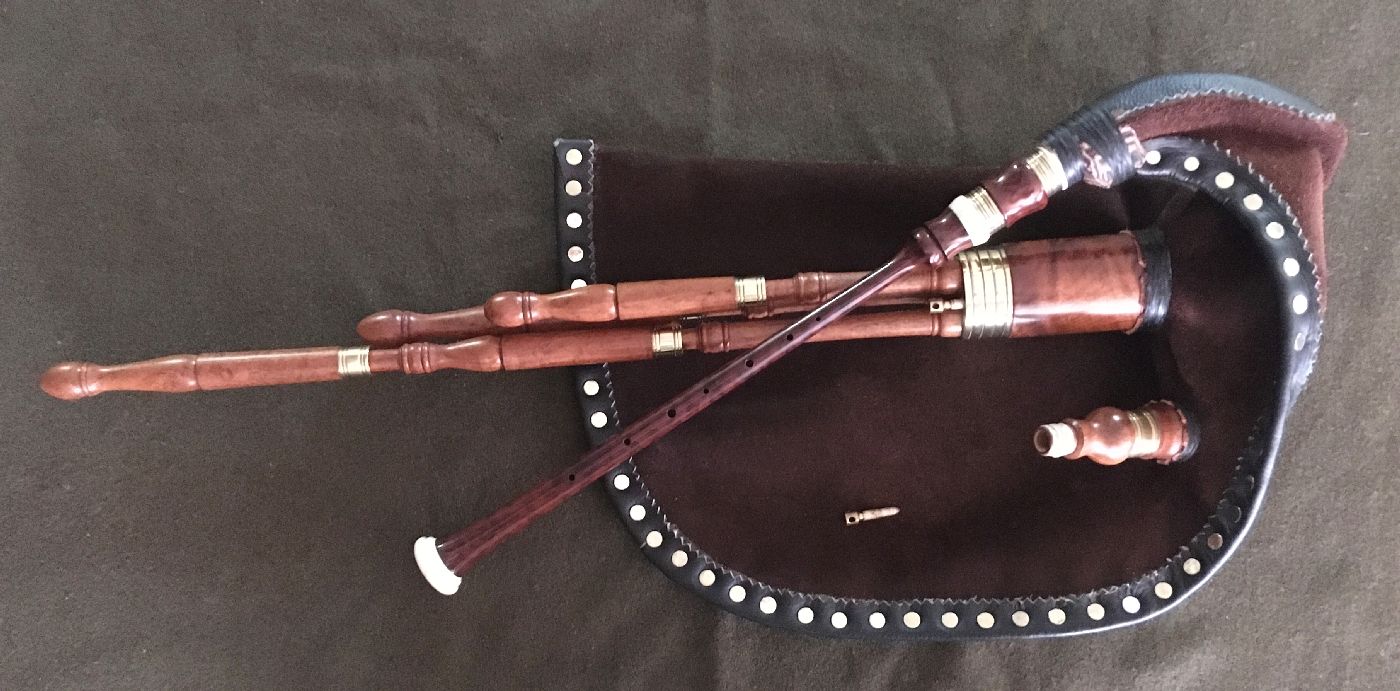
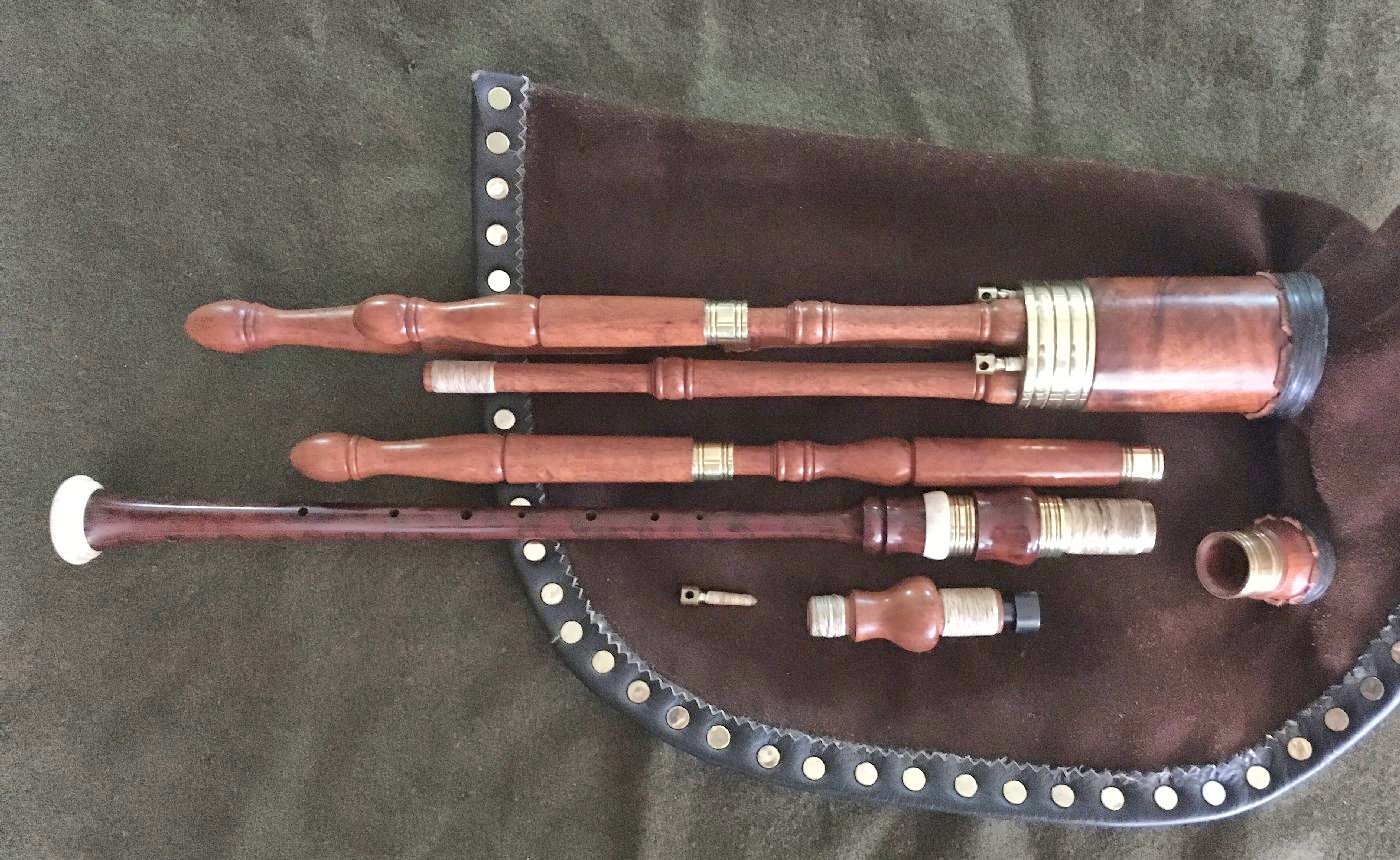
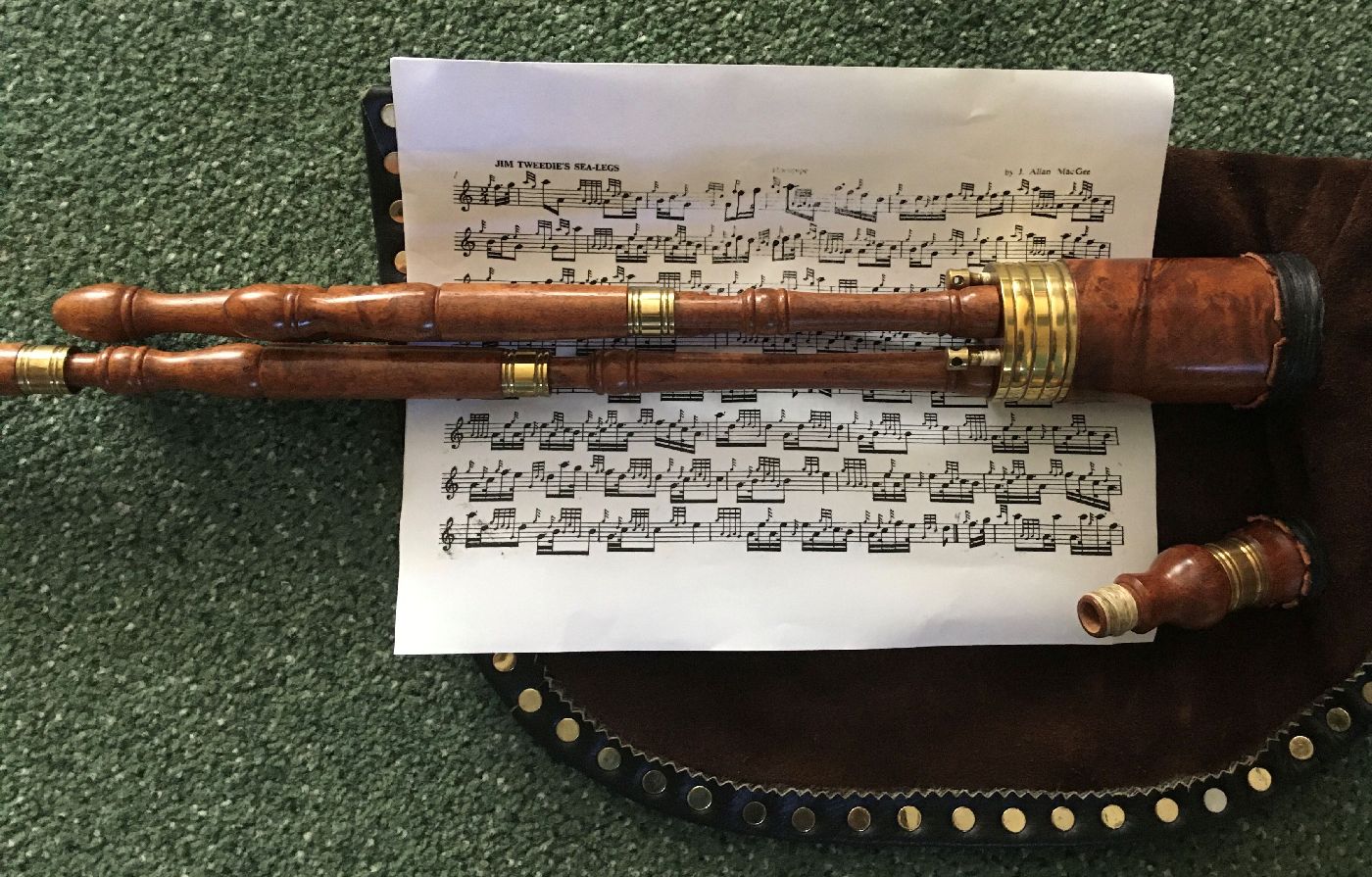
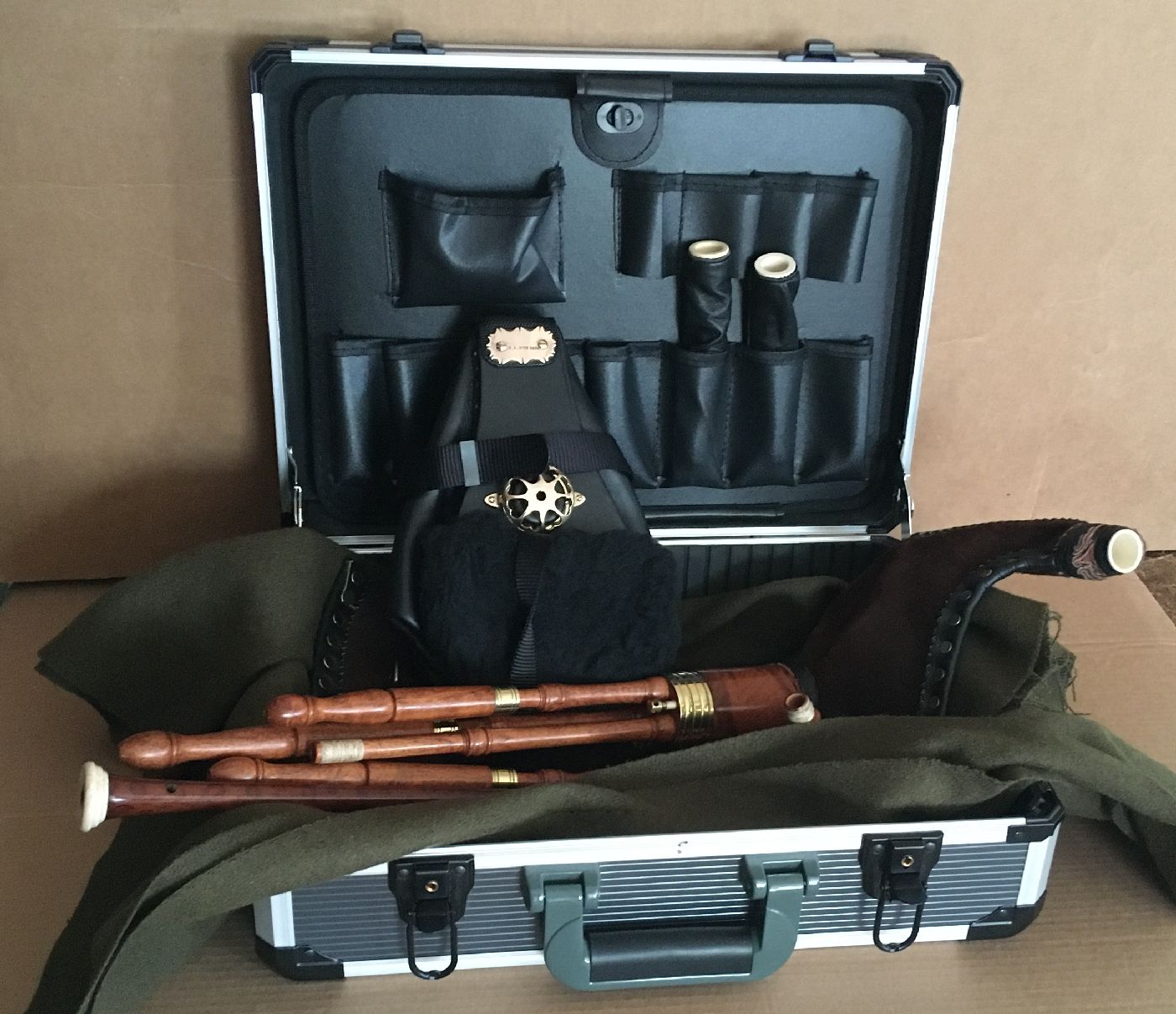
Price These smallpipes are available now and the complete set as pictured and described above is $3,000. This price does not include fully insured shipping via USPS Priority Mail and the cardboard shipping box the set will ship in. Please contact me with any questions: madow@maine.rr.com |
Guarantee I guarantee all of my work against failure due to workmanship and material. This guarantee extends to the original owner only and has no time limit. Naturally this excludes acts of God (kids, dogs, hurricanes & etc.), extremes in temperature and/or humidity and acts of craziness or negligence by the owner. This includes maintenance on or adjustments which are not specifically, recommend by the maker. Repairs or modifications done without my consultation by persons other than myself or those appointed by me will void any expressed or implied guarantee. |
I have always looked upon music as an art form and the instruments that man has devised to make music are objects of art. So you have an artisan instrument maker who makes the art object (musical instrument) which, in turn, is used by another artist (musician) to make another art form - music. An interesting and wholesome circle. |
|
Smallpipe Testimonials |
| I played last night at a Christmas party. There were about
50 people and we met in a clubhouse built into the back rooms of an
actual, operating boat-works in Greenport, NY... The pipes sounded
sweet and everyone love them. No one had ever seen Scottish small
pipes before and everyone remarked how great it was to listen to piping
that is not loud and intrusive.
I just finished playing your small pipes about 5 minutes ago. I still can't get over how much fun they are to play. I've been adding a bunch of new strathspeys, reels and jigs to my repertoire. It is just such a pleasure to play good, complex tunes on these pipes. George Monohan * |
| Dear Mike, I have been playing a set of your Scottish small pipes for about four years now and thought I would drop you a line to let you know how much I enjoy them. They are utterly reliable; I know that anytime I take them out of the case they will play. No messing about adjusting reeds, summer or winter they strike up in pitch, and with cane reeds that is not easy to achieve. Congratulations on your reed making skills. The finger spacing on the chanter is very comfortable and I can easily play for a couple of hours without any strain whatsoever. The absolute air tightness of the bag and bellows must also be a factor in this. Thanks for a great set of pipes! Richard Shuttleworth * |
|
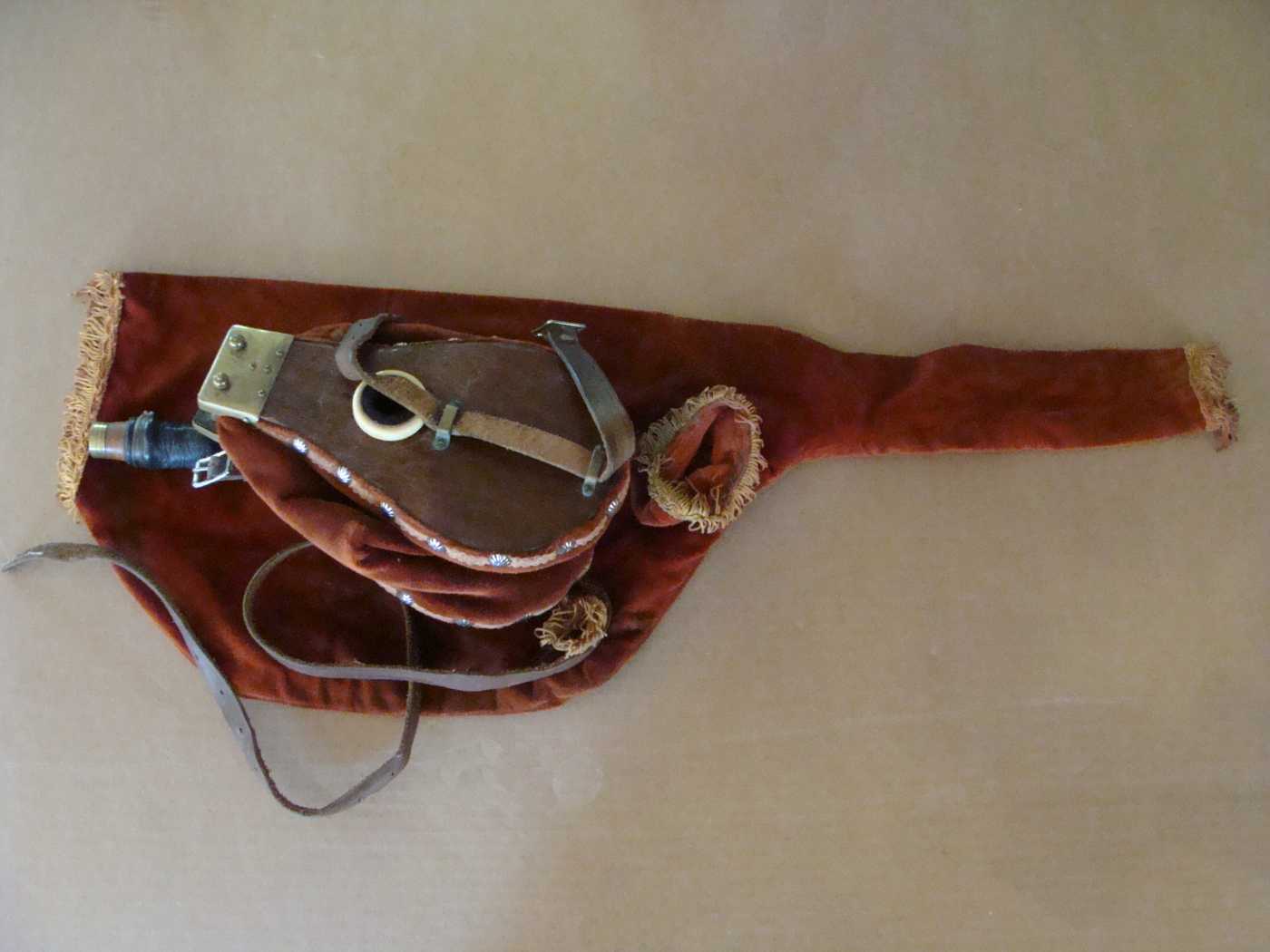
Michael, Daniel McNamara * Hello Michael! The replacement bellows hose arrived this afternoon! That was fast! It is PERFECT. I already tried it in my smallpipes, of course, I'll cut it back some, but it's ok longer. I am so so so happy I'll be able to play at our dear family friend's funeral next week! Thank you again for the part!!! As you know, I have been playing your smallpipes since 1996, and the quality & sound are still outstanding over 20 years later. Fine craftsmanship, attention to detail, the pipes are absolutely perfect in every way. When I'm playing, these smallpipes feel like an extension of myself, they are so natural and nearly effortless. Your smallpipes practically play themselves! When I'm asked how I get my smallpipes tuned so well, I like to say that you tuned them in 1996 and they stayed tuned that way! The sound is bright & clear! Thank you, Michael, for perfecting the art of creating heirloom Scottish Smallpipes! Warmly, Linda
(Thompson ) Stout * Michael, After having first heard a set of Michael's small pipes over 20 years ago in the Village Hall on North Hero Island, I finally obtained my set last year. The appearance and sound are even better than I remembered. Though Mike refers to mine as his "simpler" set - the elegant turnings of the American Honey Mesquite and the detailing on the metalwork are a testament to his meticulous craftsmanship. As to the sound....the drones are rock steady with his composite reeds and the chanter volume & intonation blend perfectly with just the right amount of "Pop." Absolutely Top-Class work, Mike. Many thanks. Seamus Monahan |
 |
 |
 |
 |
 |
 |
 |
|
 |
 |
 |
 |
 |
 |
|
 |
 |
 |
 |
 |
 |
 |
|
 |
 |
 |
 |
 |
 |
 |
|
 |
 |
 |
|
 |
|
 |
 |
 |
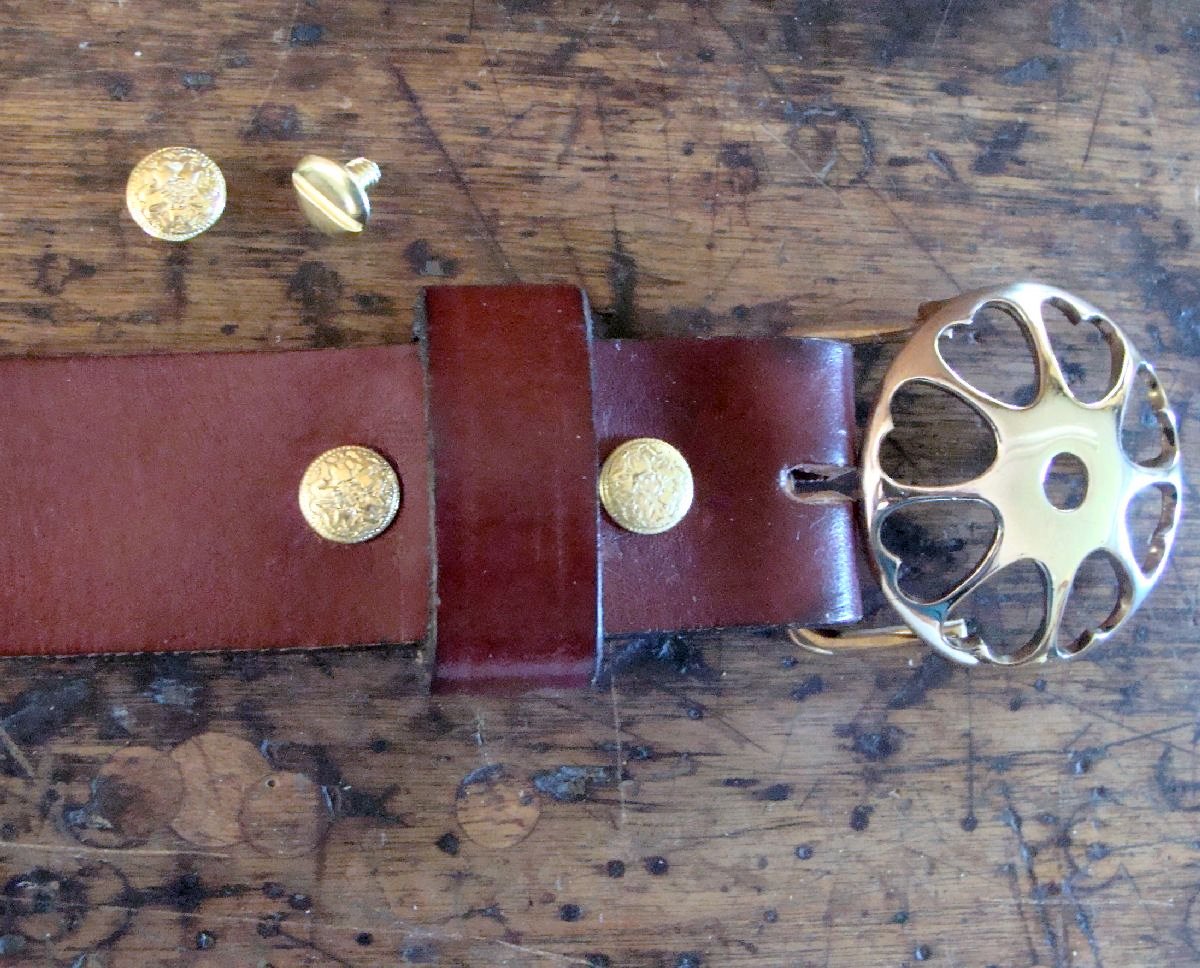 |
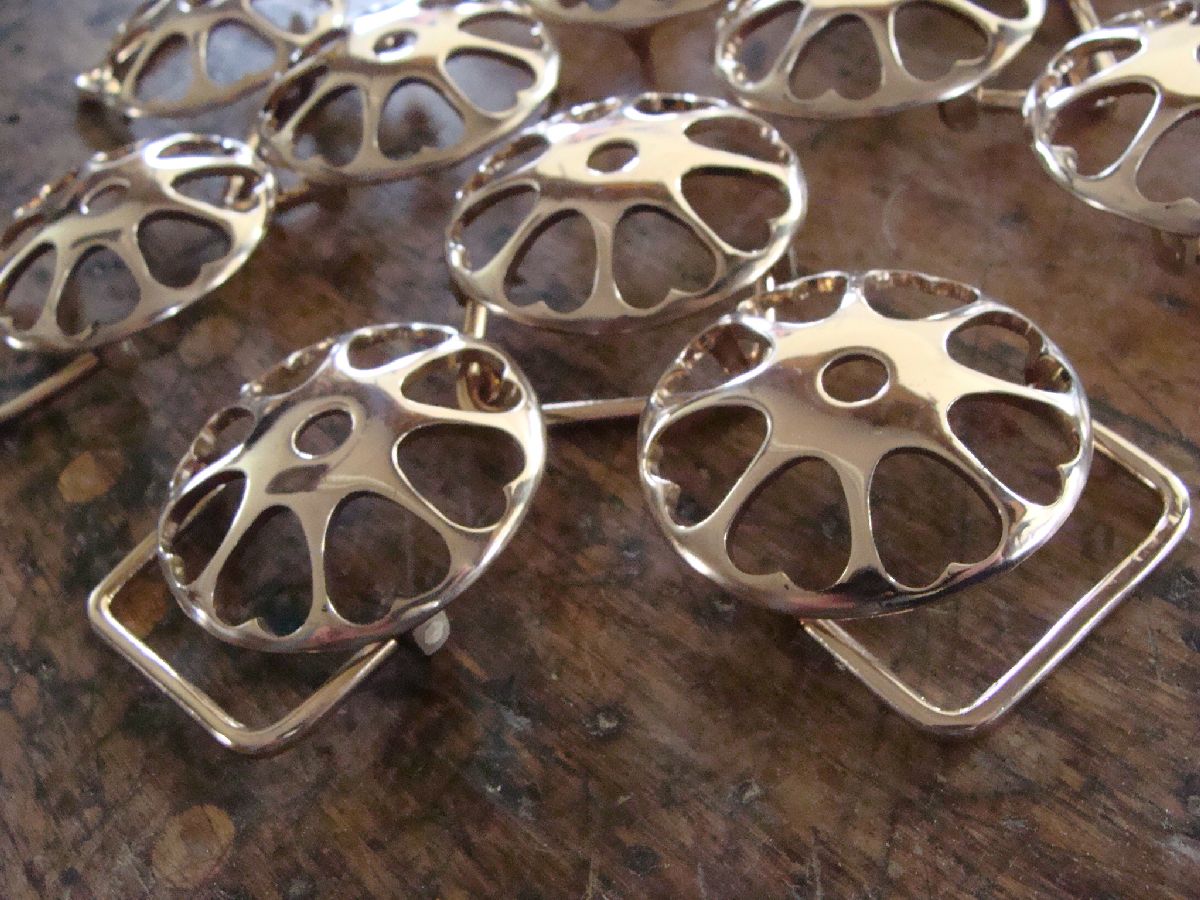
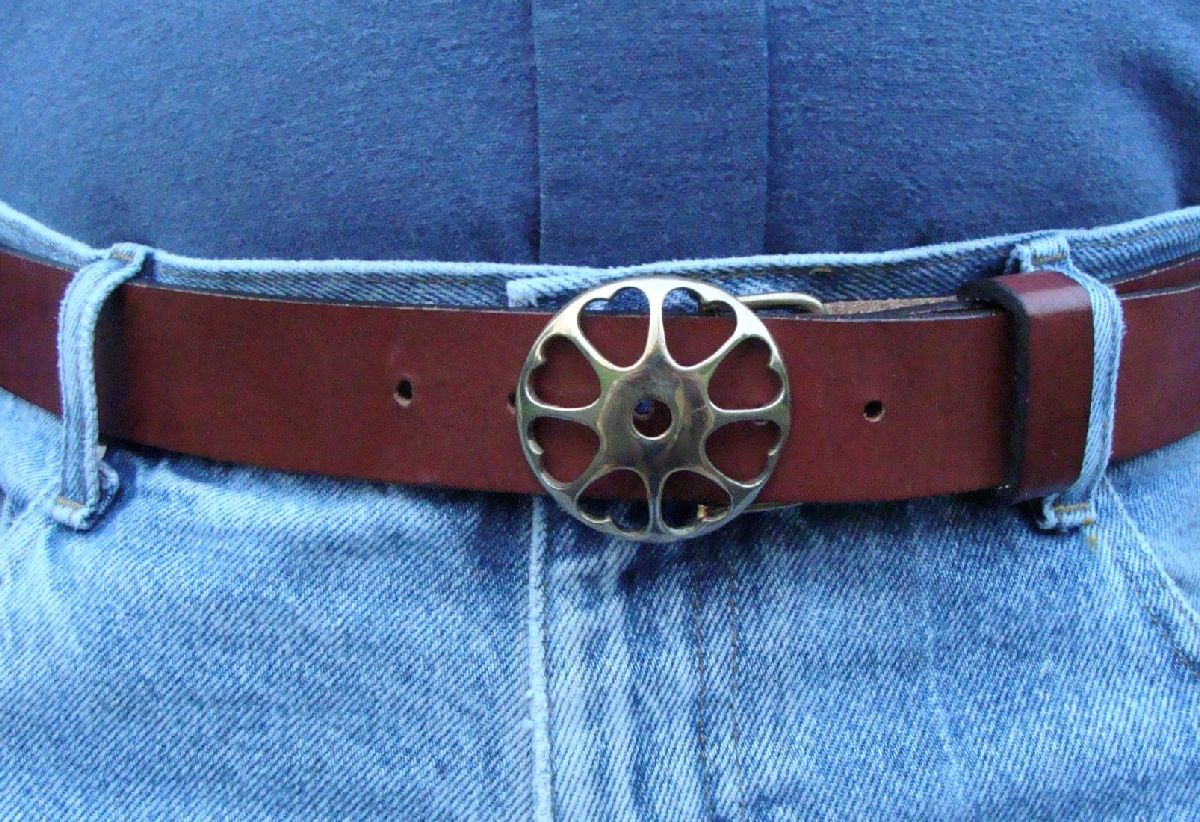
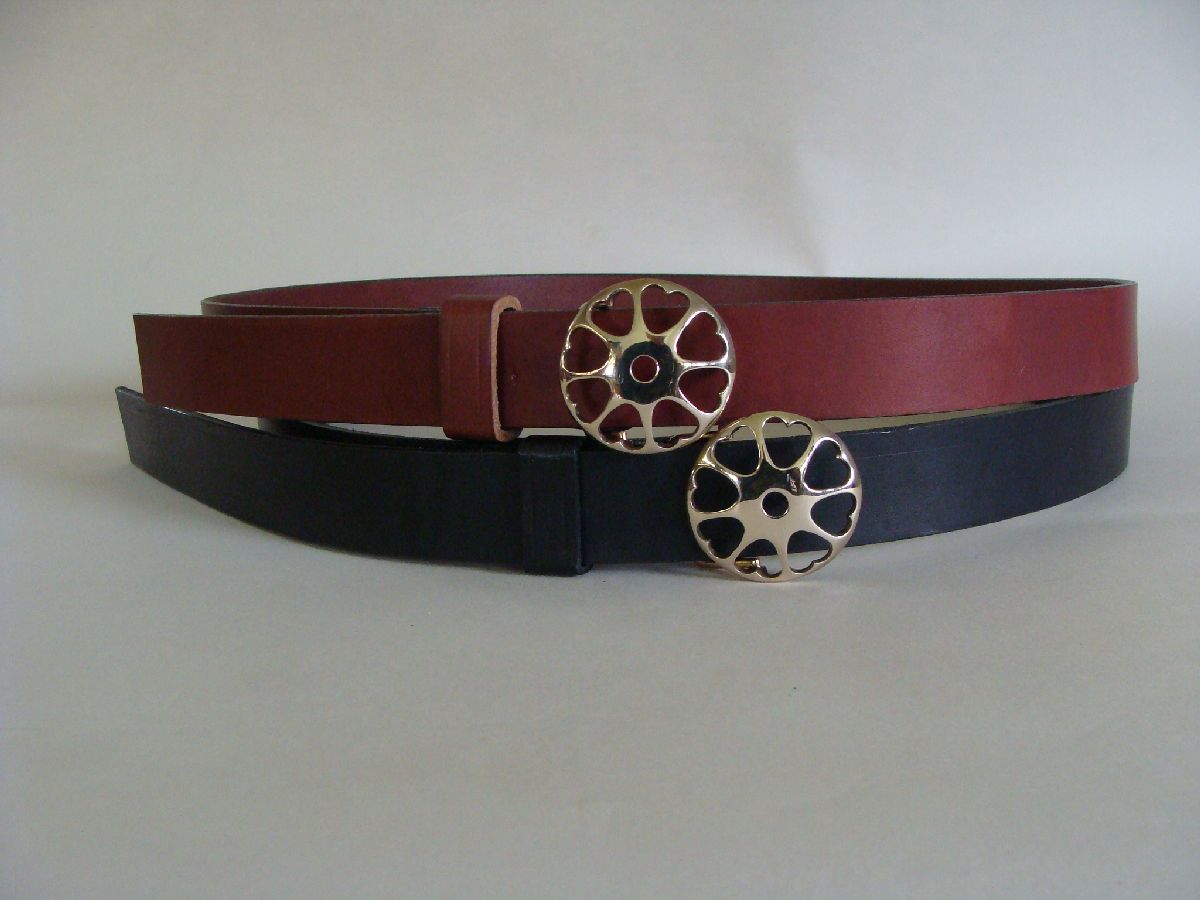
| For a long
time I have been
wondering what my bellow valve sleeve guard rosette would look like as a belt
buckle. This past winter I finally got the time to
make it up and get it cast. Just like the sleeve guard, the buckle it is
hand cast from jeweler's bronze in Maine.
The belts are all 1 1/4" wide and made from 8 - 9 oz. (around an 1/8" or 3 mm thick) English bridle leather made from American hides. This leather is used for English and western tack and belts. The front side has a beautiful lustrous finish and the back has a smooth finish. Available in two colors - chestnut brown and black. All edges are slightly rounded and dyed black. The buckles are 1 3/4" in diameter and attached to the belts by two brass Chicago screws. That means you can take the buckle off the belt without cutting anything. Rivets are permanent and snaps come loose. Size - You need to give me your accurate waist size. Please measure it and be accurate. I am not going to take it back because you thought you are smaller than you really are! Typically, the end of the belt is around 7 or 8 inches longer than the hole I punch for the measurement you give me plus a few holes on either side. Belt lengths are limited. |
|
Belt Buckle and
Belt sold in my shop -
$60.00 Shipping out of Maine but within continental USA and Canada.
Belt & Buckle payment by bank check, money order or Pay Pal - $65.00 |
|
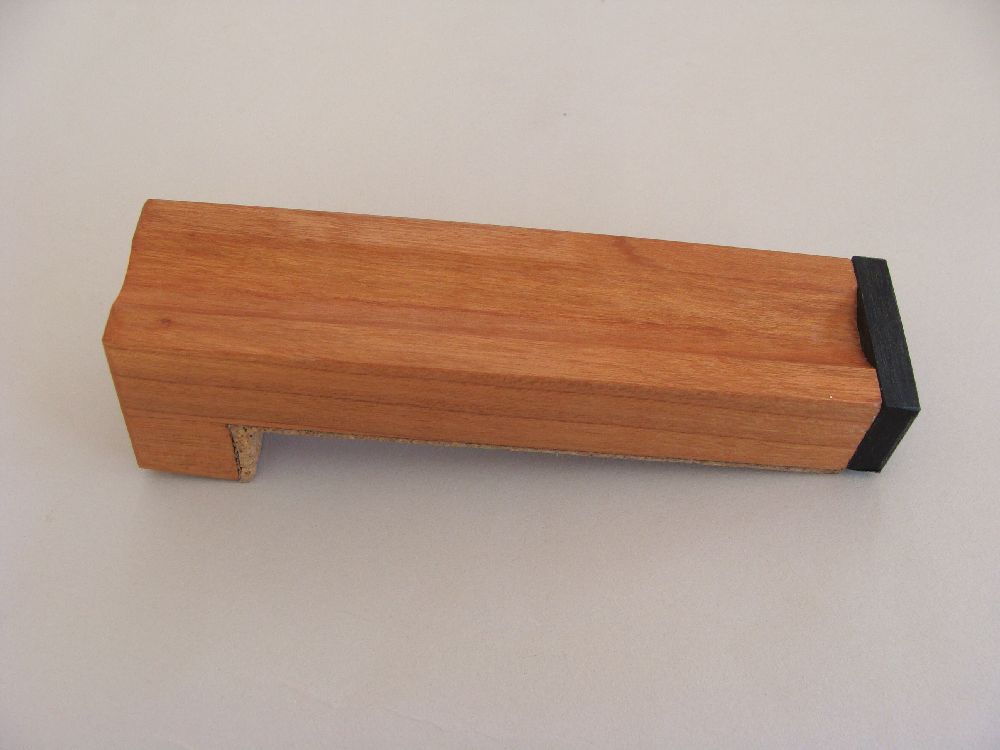
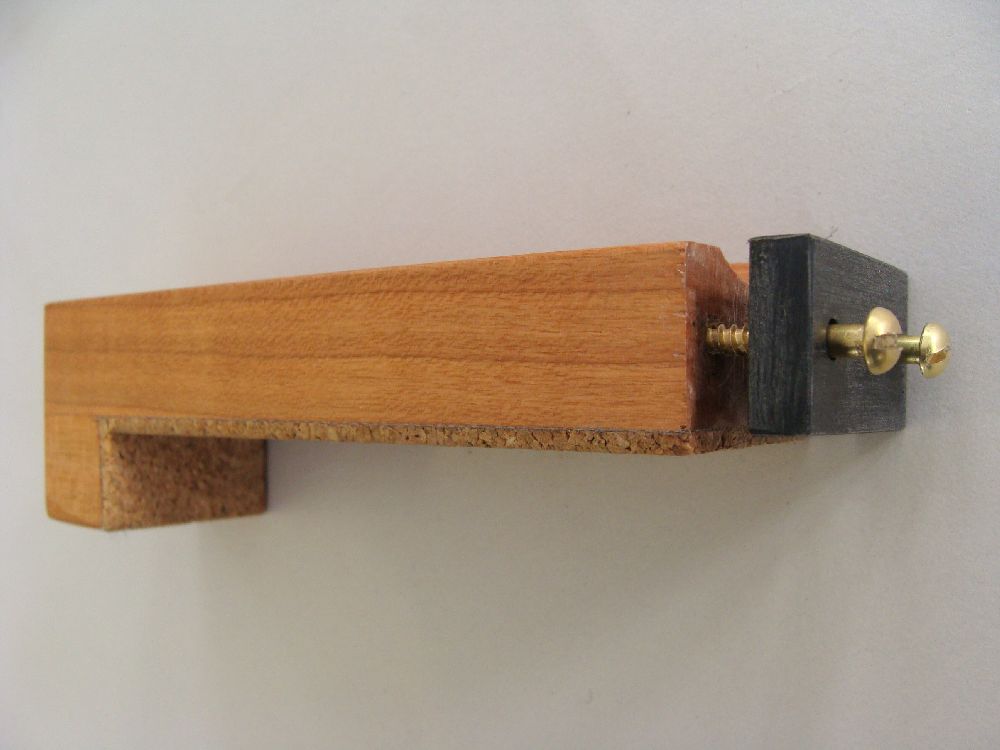
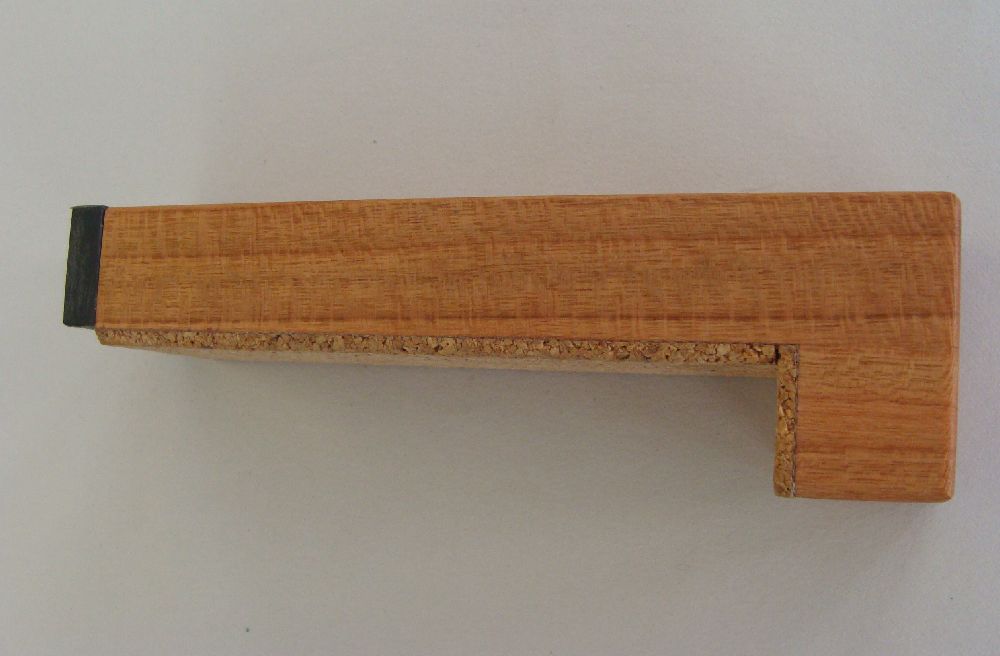
These domestic cherry shooting blocks are made by me and are 5 3/8" long x 1 3/8" wide and have the arc of a 1" diameter circle uniformly milled along their length. They have been made long enough for either uilleann or smallpipe reed slips. The chisel stop is made out of 1/4" Delrin and can be turned 180 degrees in both directions to provide four stop surfaces. It is held on with two long brass wood screws to provide for easy change. The bottom is surfaced with sheet cork as is the table edge stop. The cork helps keep the block from shifting on the table when in use and also prevents scratching. They look too good to use and should last a lifetime. Tung oil finish. |
 |
 |
 |
|
Shooting Block Price Domestic Price includes shipping anywhere in the continental U.S.A. Domestic
payment by bank check or money order - $60 |
|
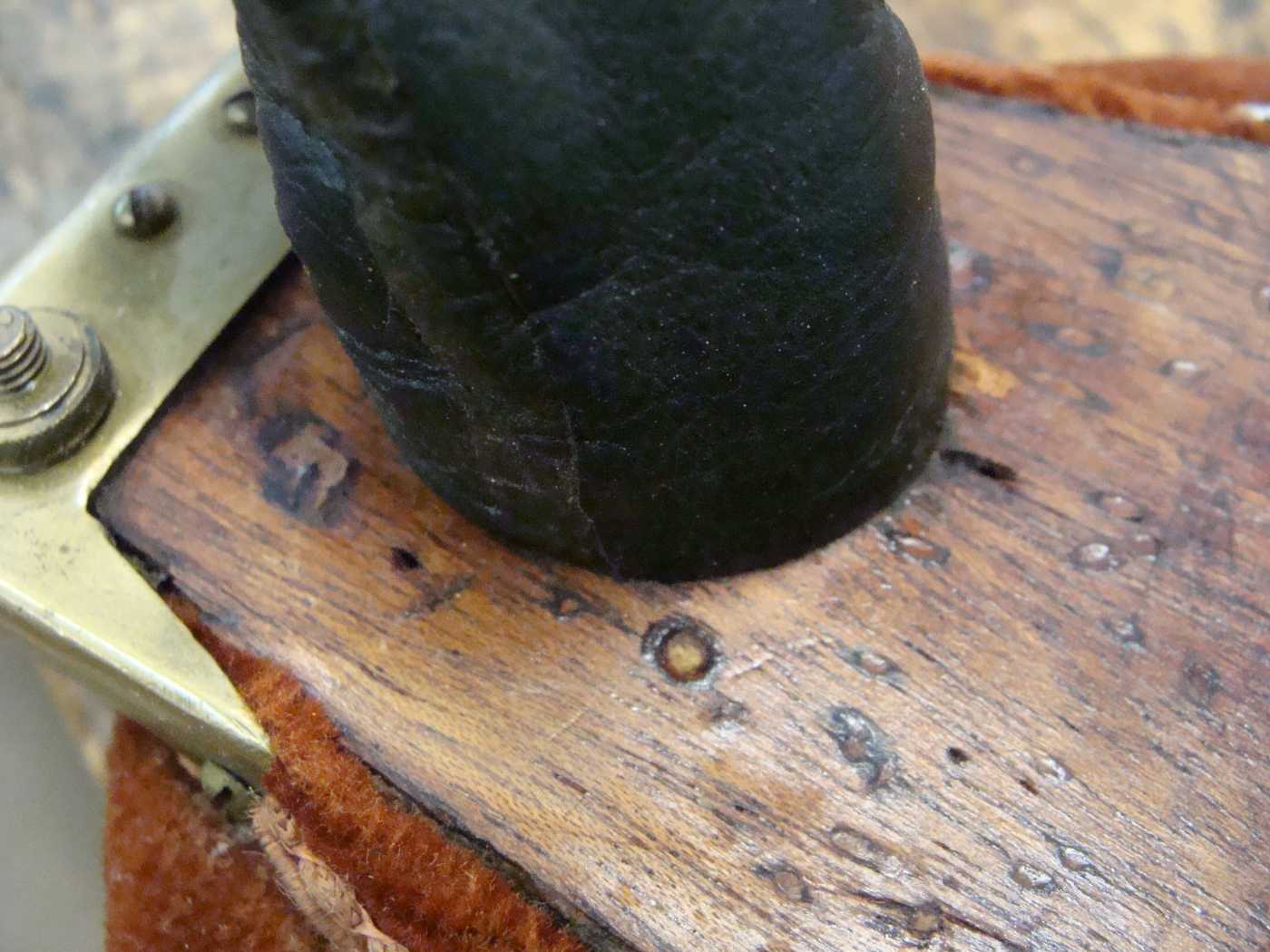
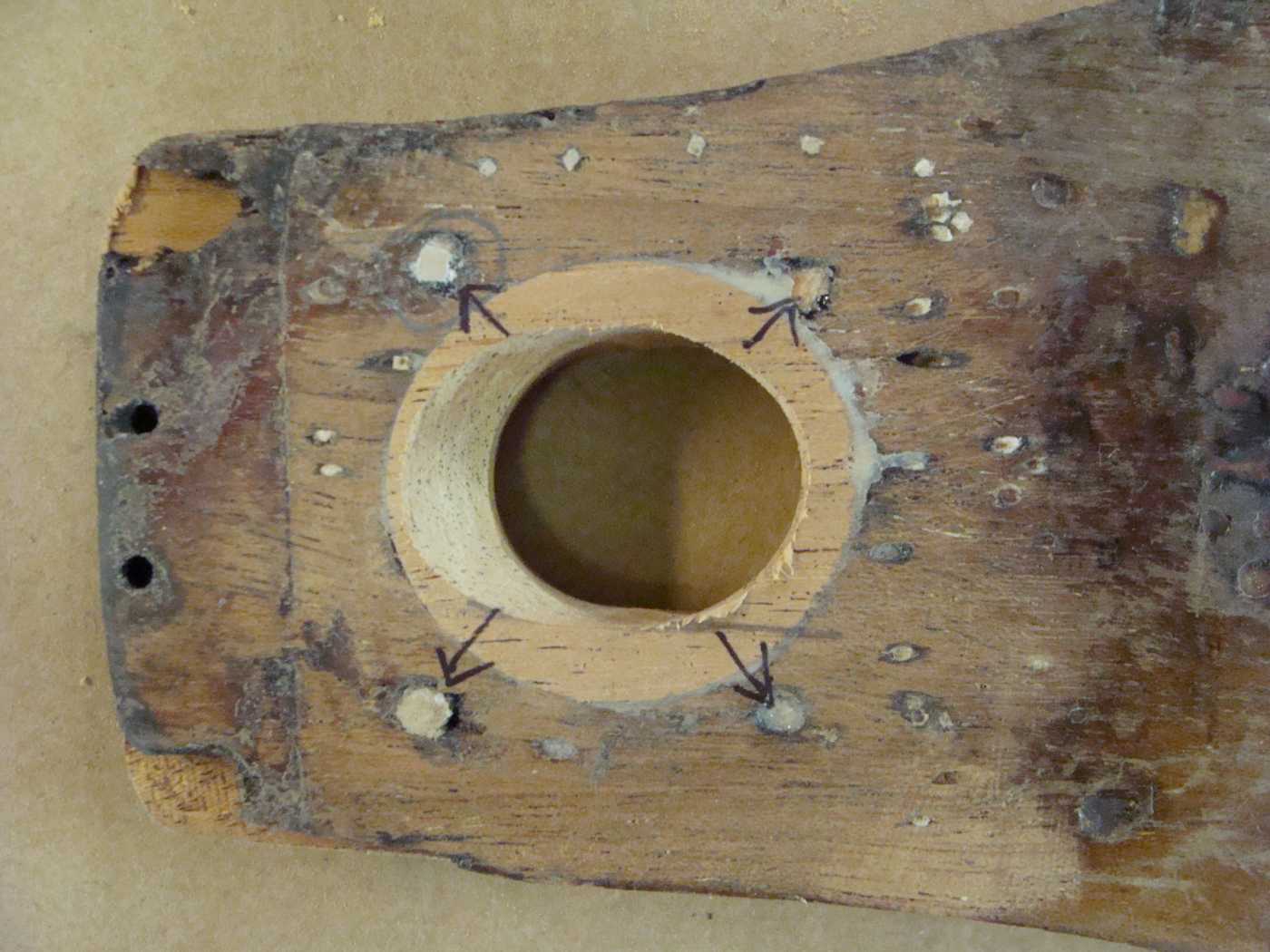
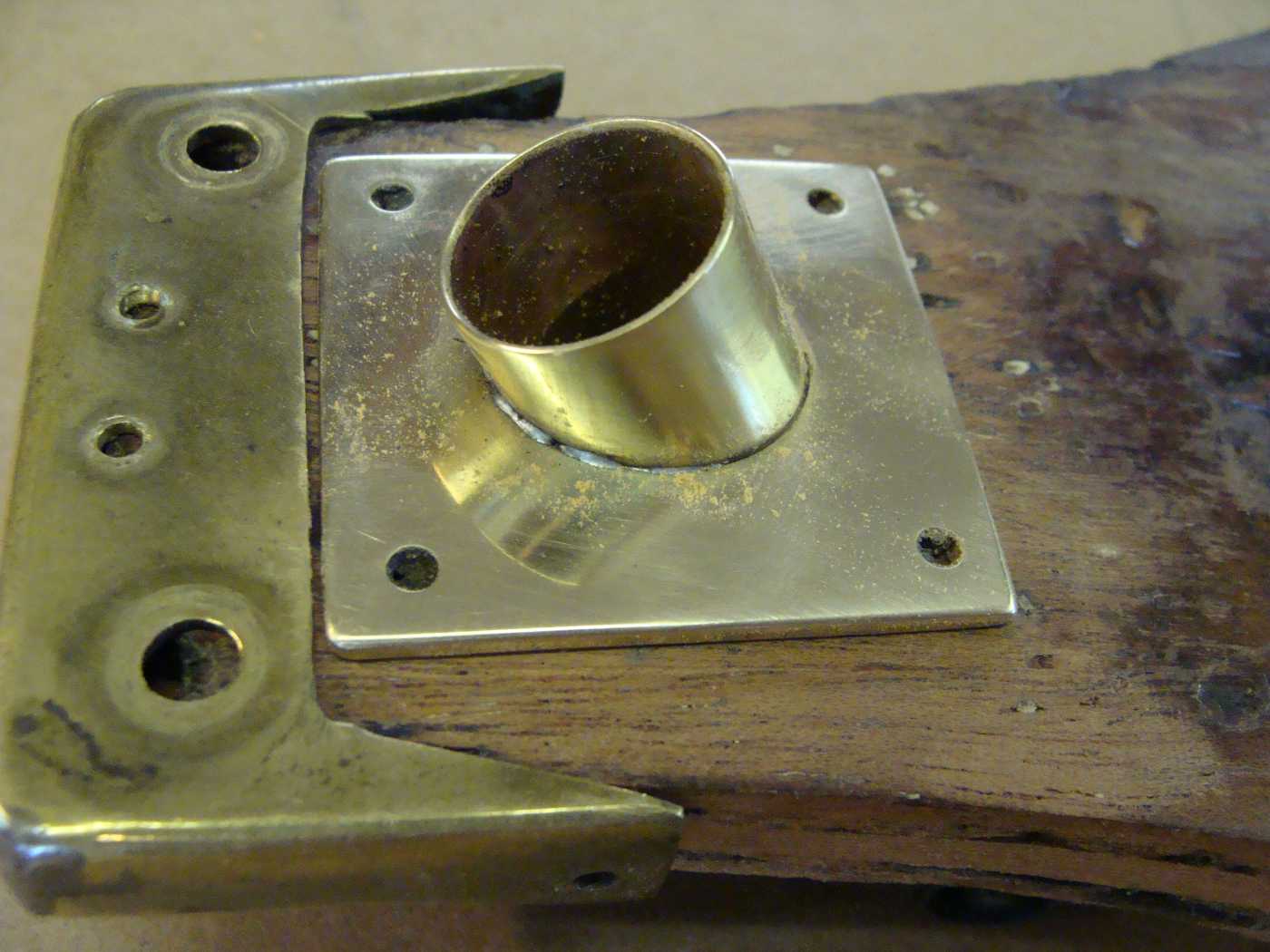
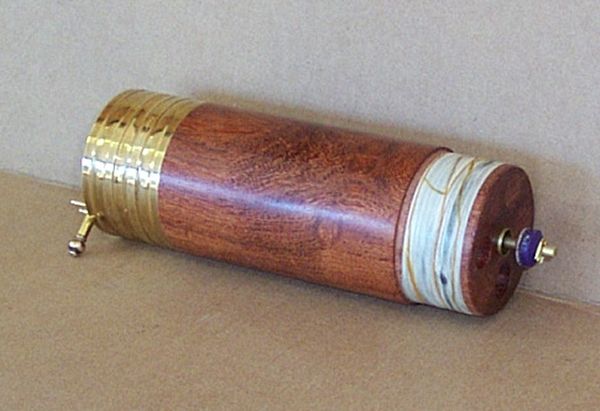
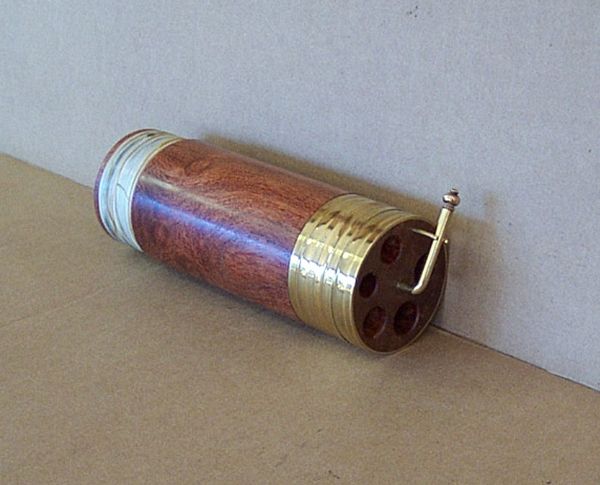
These common stocks are made out of American Honey Mesquite. I make Scottish Smallpipes out of this material because it is more stable than any other domestic wood. Mesquite common stocks I have made have never shrunk enough during dry, Northeast winters to throw off their ferrules. The switch shaft is solid 3/16" brass rod. Although the pictures do not show it, that rod runs snugly up through a piece of brass tubing pressed down into the center hole. This gives a very nice, smooth on/off motion and the fit is so uniformly snug, there is little if any air leakage. On the other end, the valve is made out of a faucet washer with a bit of leather glued onto the flat face. It seats against a 1/2" diameter X 1 1/4" long piece of brass tubing that has been sunk into a counter bored hole. The traverse holes that feed the drones are cut through the tube after it is in place. As you can see, this tube sticks up proud of the end of the stock by about 1mm and provides a very positive seat for the valve. |
 |
 |
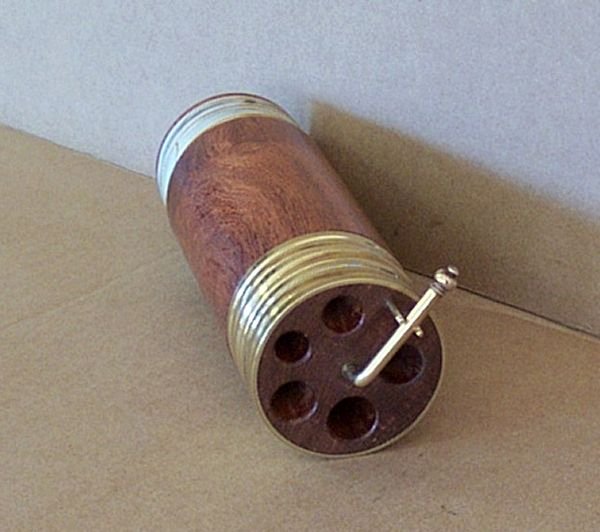 |
I stole both of these ideas off the stock of my 1933, Patrick Hennely "D" set. Hennely, like every other pipemaker I have known, liked to experiment. One way or the other, both are good ideas. I incorporated another worthy idea from that Hennely set. The hole for the tenor drone is 7/16" diameter. Holes this small can sometimes be a pain in the neck to the reed that has to fit down in them. The reed can hit the side of the hole if it is not very straight in it's seat. Also, if weight is added to the end of the tongue, this can sometimes hit as well. This problem was solved by making the 7/16" hole only as long as the pin on the drone. The rest of the hole was bored out to 1/2" diameter. A 3/16" hole was gun drilled as a pilot for each of the five and the holes bored with a piloted countersink or piloted end mill as they are sometimes called. |
Domestic
payment by bank check or money order - $400 |
|
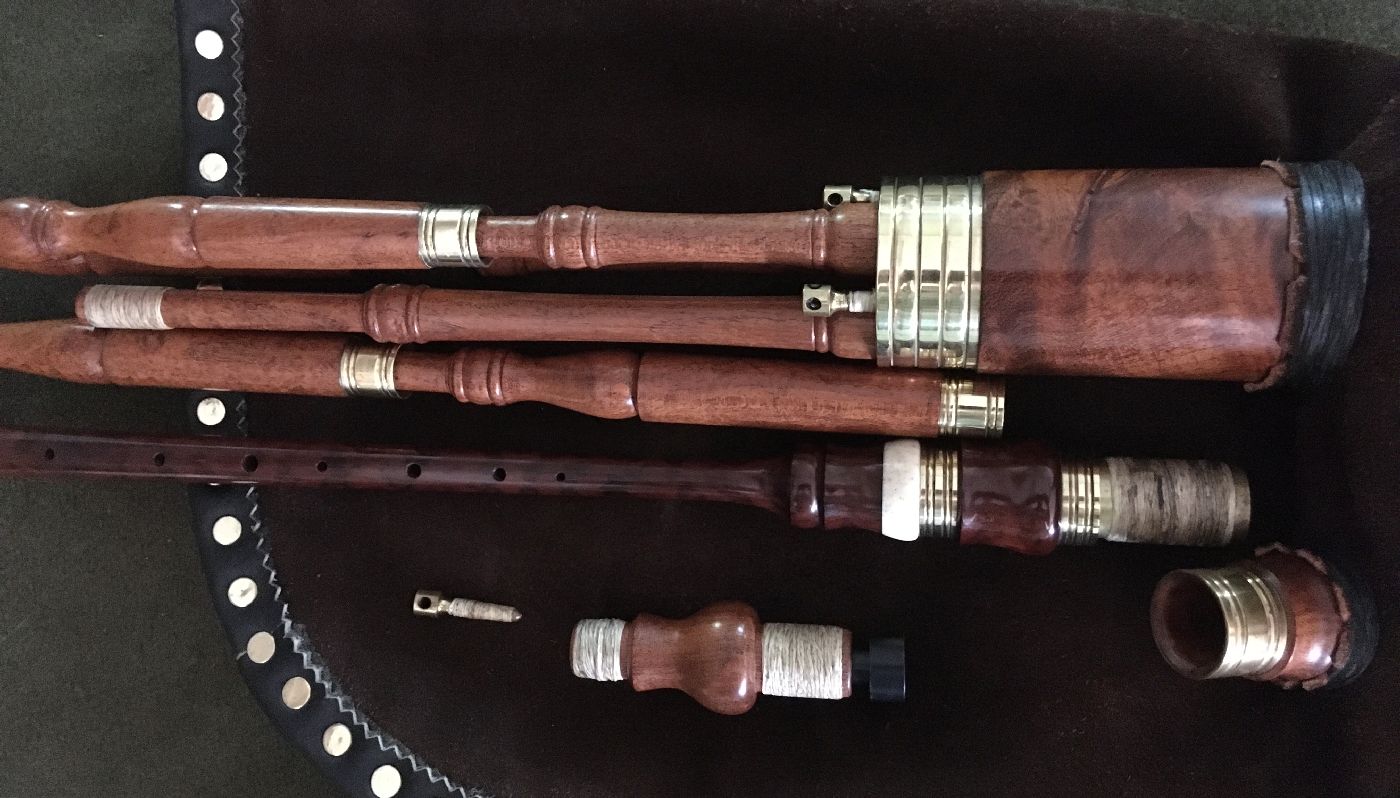
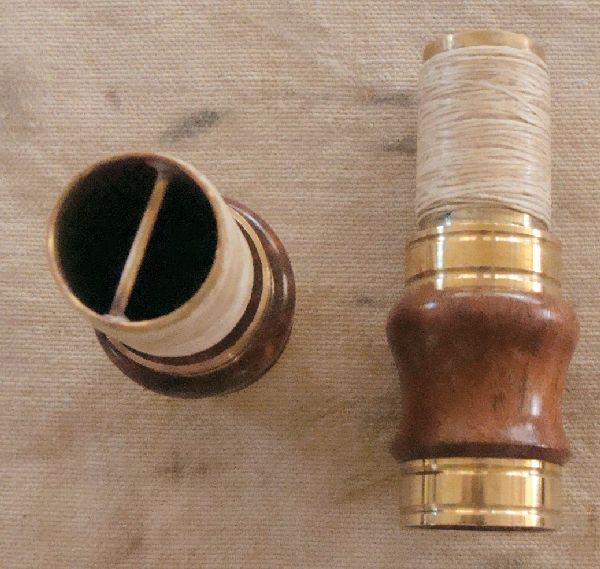
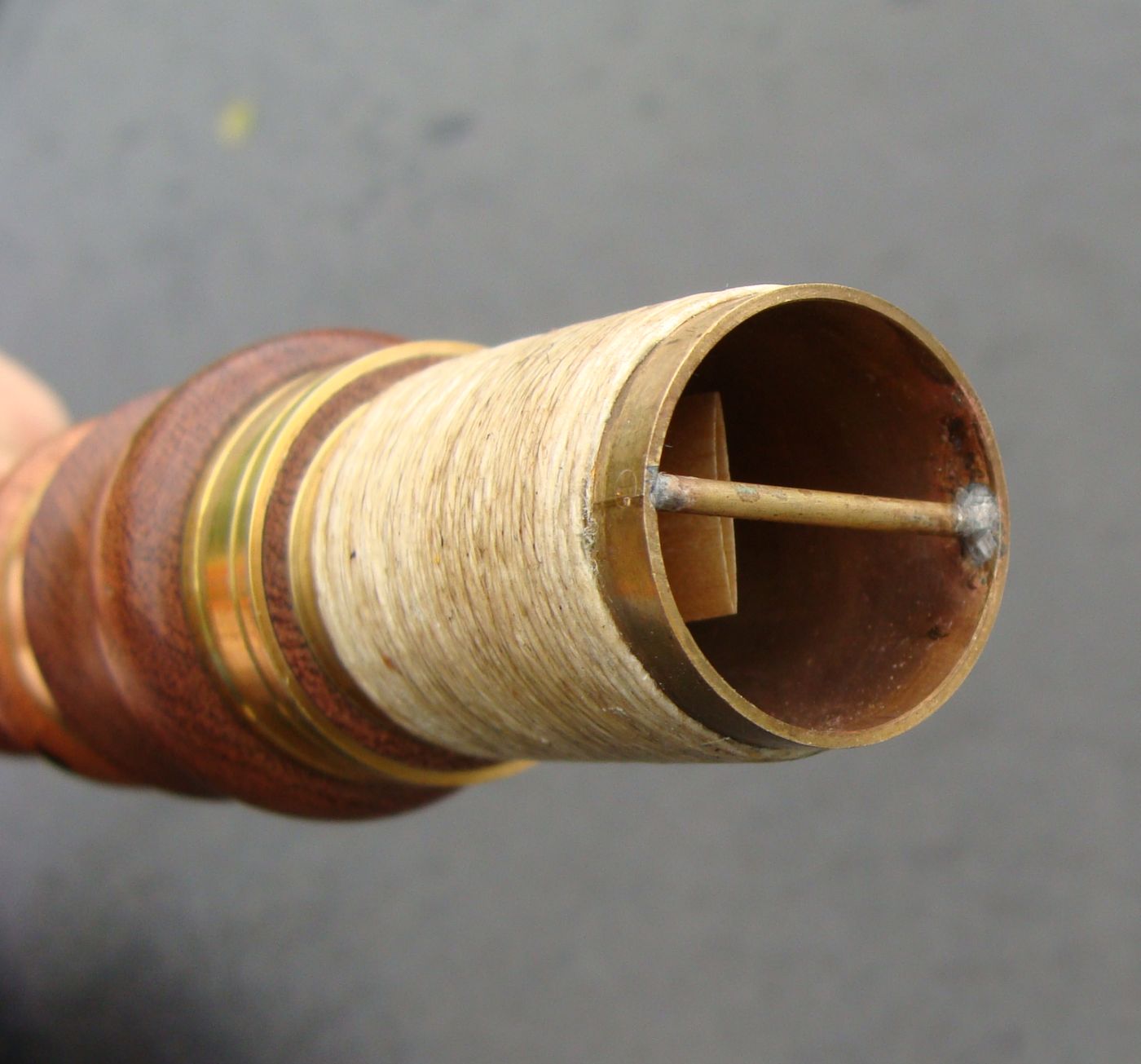
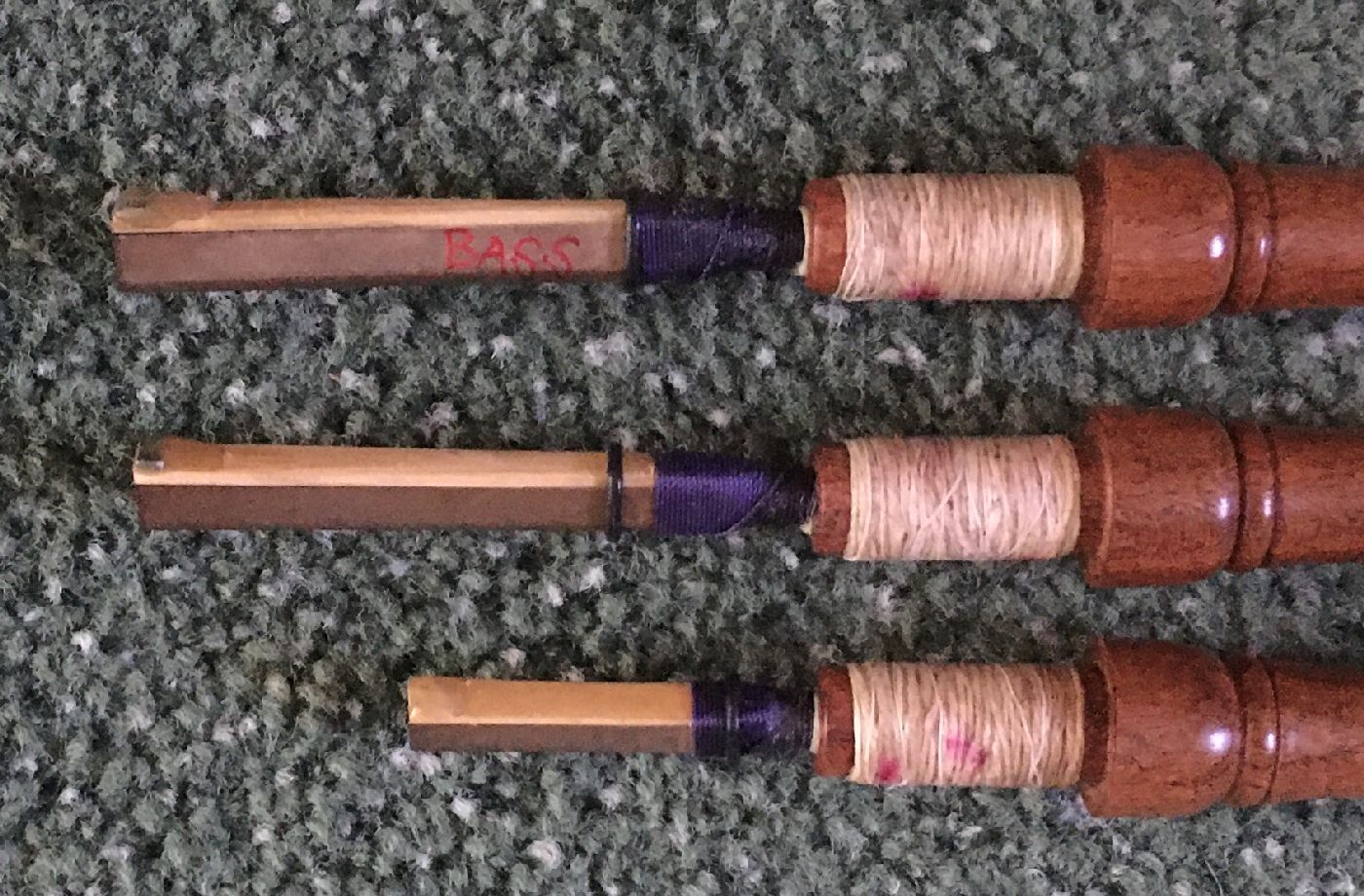
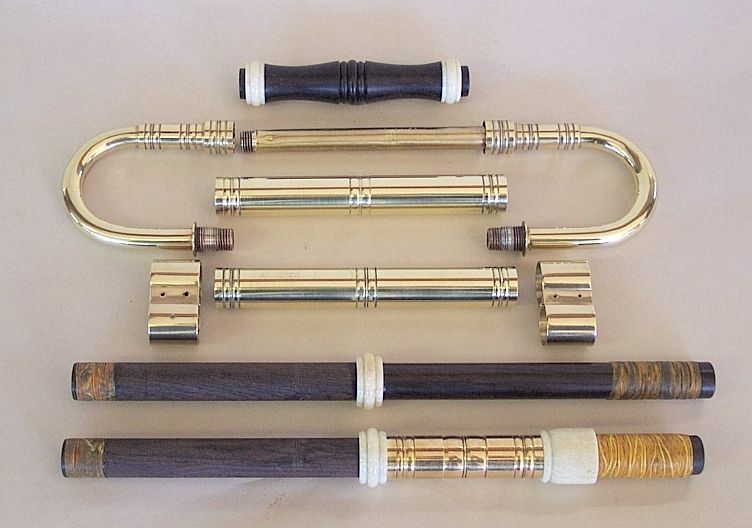
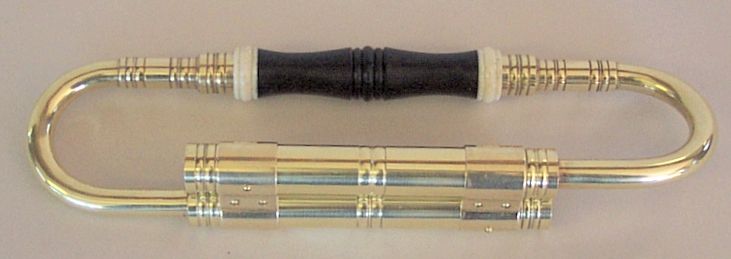
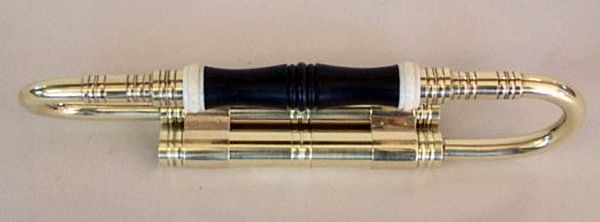
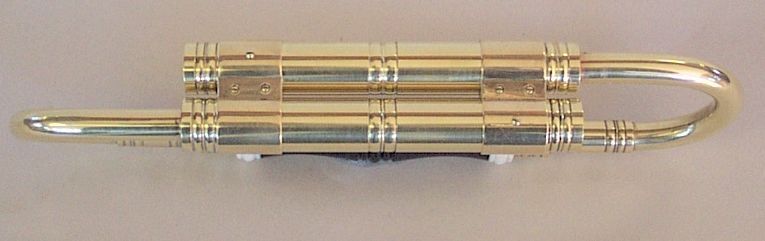
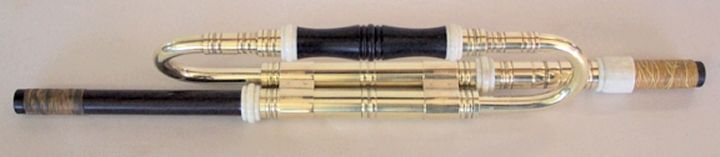
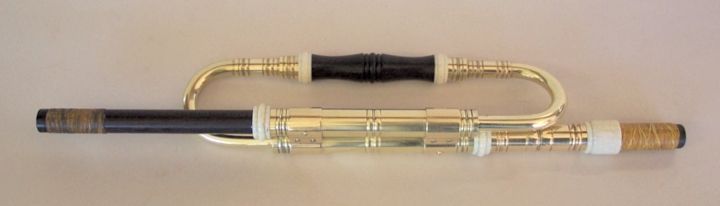
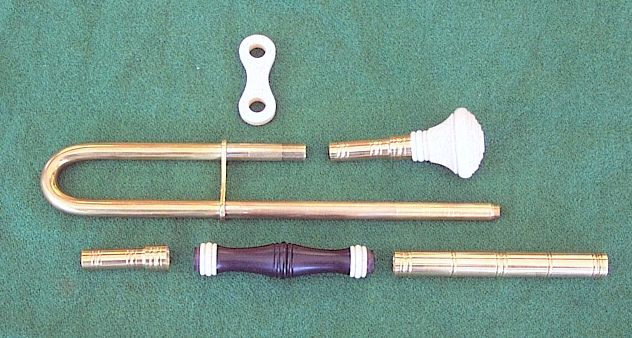
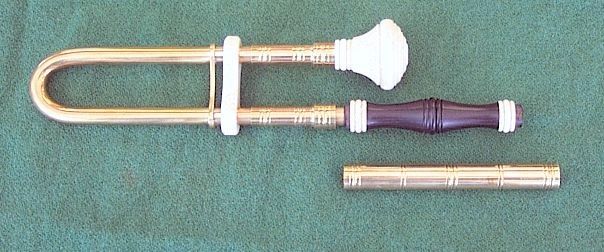
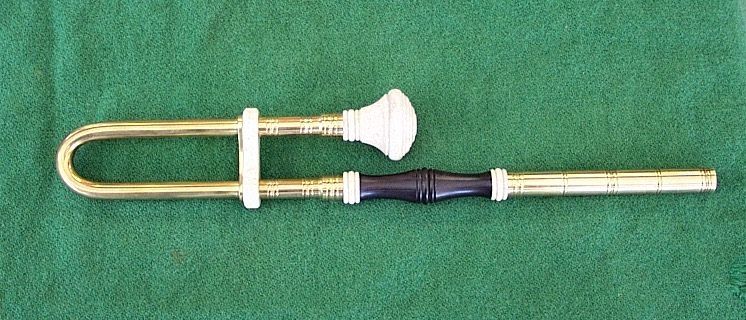
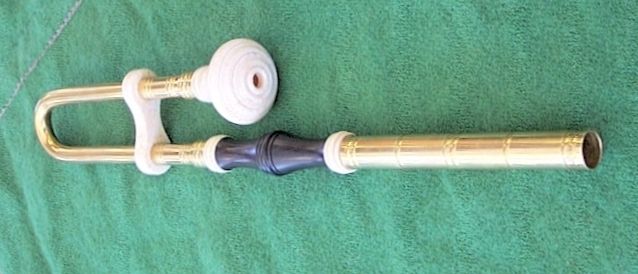
Uilleann Pipe Bass Drone in the key of "B" This set of pipes are not for sale. I mention them here strictly as a historic reference. It was a long winter (2004-5) on the Southern Maine coast and I used part of it to complete two bass drones for two half set both for Bill Thomas "B" chanters. One is mounted in moose antler for piper Tom Wilsbach from Portland, Maine and the other was for myself. Other than the material used for the mounts, the bass drones have another interesting feature: they are, in the words of pipemaker Bruce Childress, "serviceable." That is to say that both the tuning and standing portions of each drone can be completely taken apart and put back together. The pictures are of the tusk mounted drone and show how. |
 |
 |
 |
 |
|
 |
 |
|
 |
 |
 |
 |
|
|
|
|
Testimonial from Tom From the Irish uilleann bagpipe chat list "Many if not most on this (uilleann pipe) list are Yanks; for those who are not, this post was inspired by the recent American Thanksgiving holiday. The holiday's purpose is self-evident, and its celebration includes a huge harvest feast often accompanied by some thoughts on what I am most thankful for this year. "Very high on my list this year are my new drones for a B set, made by Mr. Michael Dow of York, ME, with whom I have been playing tunes and swapping lies now for a good ten years. Michael has some photos and details on these drones and the similar set he made for himself on his website (www.archcarving.com), but I have to say loudly and publicly that these hummers are outstanding. If you had kittens that purred in three octaves, that would give you an idea of their sound: not overwhelming in volume, but perfectly blended. And the workmanship is of the highest order. Thanks, Michael, for this wonderful set! My hat's off to you." Tom Wilsbach, Portland, ME - November 11, 2005 |
|
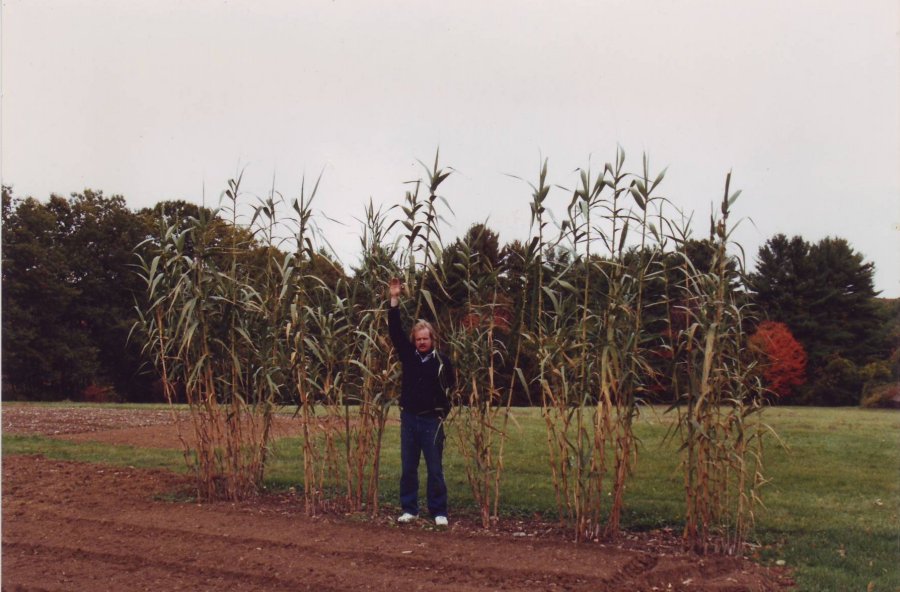
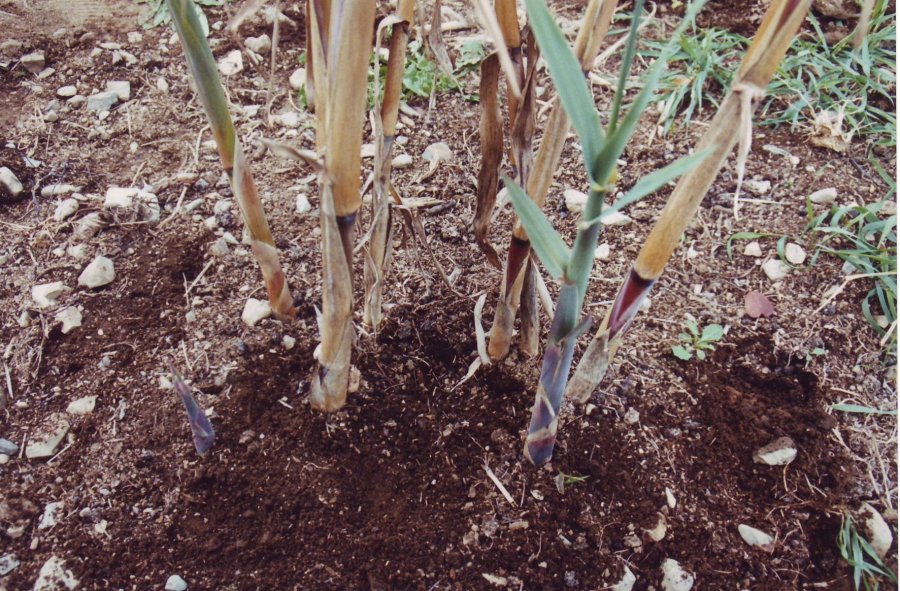
Arundo Donax in Southern Maine Here are a couple of pictures from the past. By 1992 I had managed to get some Arundo Donax to grow in my garden and these pictures show those plants. The top of my fingers are about 8' above the ground so the plants were 12' or 13' tall. Naturally, it took a few years to get them this high, although I do not remember how many. I do know that we had a very cold winter and the frost went pretty deep and killed them. The interesting part is that I live in Southern Maine, maybe 2 miles from the coast. So, with more mulch these plants might be growing today. I still have some cane from these plants but none was quite large enough to make into reeds. Maybe it's time to try again. |
 |
 |
|
|